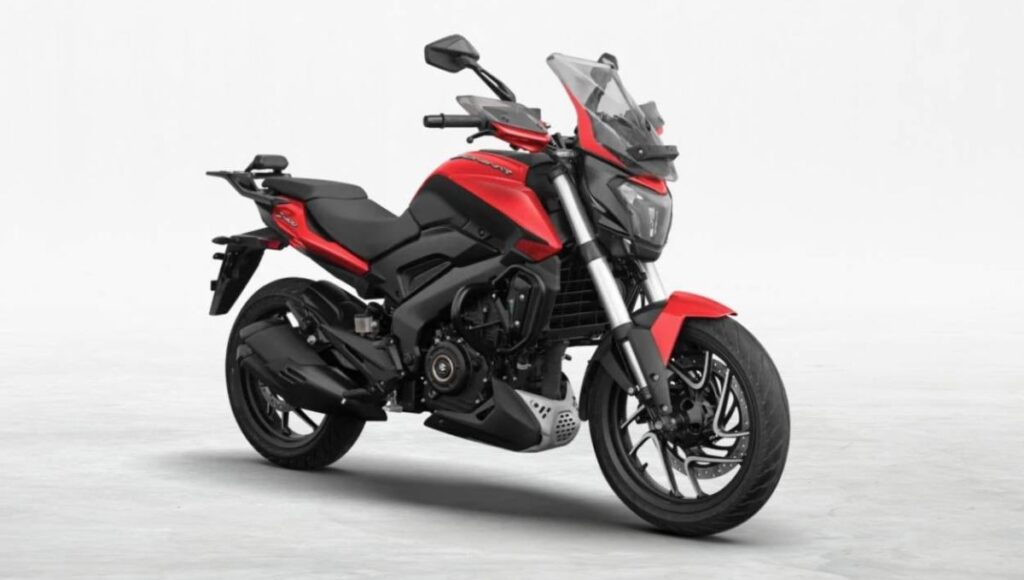
The Indian premium motorcycle segment is entering a new phase, where manufacturers are no longer competing only on performance and features but also on smart pricing strategies. In this changing landscape, Bajaj Auto has made a bold move by reintroducing the Bajaj Dominar 400 at a significantly reduced price point.
The motorcycle now starts at ₹2,03,214 (ex-showroom, Delhi), making it nearly ₹37,000 more affordable than before. This dramatic price correction immediately grabs attention because the Dominar has long been regarded as one of India’s most capable touring motorcycles in the affordable premium category.
The biggest factor behind this revised pricing is a strategic engine resizing to 350cc, allowing Bajaj to take advantage of India’s lower 18% GST slab for motorcycles under 400cc. The result is a motorcycle that promises to retain its touring DNA and highway performance while becoming far more accessible to a broader audience.
This move could have a major impact not only on Bajaj’s position in the market but also on how manufacturers approach the premium motorcycle segment in India going forward.
A Strategic Shift Rather Than a Simple Downsizing
At first glance, reducing engine capacity may appear to be a compromise. However, Bajaj’s decision reflects a much deeper understanding of the Indian motorcycle market.
India remains one of the world’s most price-sensitive automotive markets. Even buyers interested in premium motorcycles carefully evaluate value for money before making purchasing decisions. A difference of ₹30,000–₹40,000 can significantly influence customer behavior, especially among young riders upgrading from smaller motorcycles.
By repositioning the Dominar within the sub-400cc category, Bajaj has effectively unlocked a lower taxation bracket without fundamentally altering the motorcycle’s identity.
This is an important distinction.
The company is not trying to create an entirely new motorcycle. Instead, it is optimizing the existing product to make it more financially attractive while preserving the characteristics that made the Dominar popular in the first place.
In many ways, this is a smart adaptation to local market realities rather than a performance downgrade.
The Dominar’s Legacy in India
Ever since its launch, the Bajaj Dominar 400 has occupied a unique space in India’s motorcycle market.
Unlike aggressive supersport motorcycles or hardcore off-road machines, the Dominar was designed as a practical sports tourer — a motorcycle capable of handling daily commuting while also excelling on long highway journeys.
This dual-purpose identity became one of its biggest strengths.
For many Indian riders, owning multiple motorcycles is not financially practical. They need one motorcycle that can comfortably manage office commutes during the week and long-distance touring on weekends or holidays.
The Dominar successfully addressed that need.
Its muscular design, relaxed ergonomics, stable highway behavior, and strong mid-range performance helped it develop a loyal following among touring enthusiasts. Over time, the motorcycle became especially popular within India’s growing road-trip culture, where riders increasingly explore interstate travel and cross-country touring.
The bike’s reputation for endurance and reliability made it a favorite among long-distance riders looking for an affordable touring machine.
Retaining the Touring Character
One of the biggest concerns whenever an engine is downsized is whether the motorcycle will lose its core personality. However, Bajaj claims the new 350cc-powered Dominar retains the same highway-focused character and touring capability that riders expect.
This is crucial because touring motorcycles are judged differently from performance street bikes.
Touring riders prioritize comfort, stability, cruising ability, and endurance over outright top speed or aggressive acceleration. A motorcycle that feels planted on highways, handles long hours comfortably, and offers smooth power delivery often matters more than peak horsepower figures.
The Dominar has traditionally excelled in these areas.
Its stable chassis, comfortable riding position, and muscular road presence have always contributed to its appeal. Bajaj appears to have retained these qualities while making the motorcycle more financially accessible.
That balance could significantly strengthen the Dominar’s appeal in the Indian market.
Pricing Changes Everything
The revised pricing of ₹2,03,214 dramatically alters the Dominar’s competitive positioning.
Previously, the motorcycle sat in a slightly awkward zone where customers often compared it with higher-performance options or adventure motorcycles. While the Dominar offered strong touring capability, its pricing sometimes pushed buyers toward alternatives in adjacent categories.
Now, with the reduced price, the motorcycle becomes substantially more attractive.
For riders upgrading from 150cc or 200cc motorcycles, the Dominar suddenly feels much more attainable. Young professionals, college graduates, and first-time premium motorcycle buyers may now view it as a realistic option rather than an aspirational stretch purchase.
This affordability could also expand the motorcycle’s reach into Tier 2 and Tier 3 cities, where demand for premium motorcycles is growing rapidly but price sensitivity remains extremely high.
In India, accessibility often determines market success more than pure specifications.
The Importance of the Sub-400cc Segment
The Indian motorcycle market has developed a particularly strong interest in motorcycles below the 400cc mark.
This segment offers a unique balance between affordability, performance, manageable running costs, and tax benefits. Riders get enough power for highway touring and spirited riding without entering the significantly more expensive territory of larger-displacement motorcycles.
Manufacturers have increasingly recognized the importance of this category.
By bringing the Dominar into the sub-400cc bracket, Bajaj aligns the motorcycle with one of the fastest-growing premium segments in the country.
This move also reflects a broader industry trend where manufacturers are carefully optimizing engine capacities to maximize value under India’s taxation structure.
Rather than chasing larger displacement numbers, brands are now focusing on delivering smarter value propositions.
Daily Usability Still Matters
Another reason for the Dominar’s enduring popularity is its balance between touring capability and everyday practicality.
Unlike extreme supersport motorcycles that can feel uncomfortable in city traffic, the Dominar remains usable for regular commuting. Its upright riding posture, comfortable seat, and relaxed ergonomics make it practical for daily use.
This versatility is especially important in India, where motorcycles are often primary vehicles rather than secondary leisure machines.
A buyer spending over ₹2 lakh on a motorcycle usually expects it to handle multiple roles effectively. The Dominar’s ability to transition between urban commuting and long-distance touring remains one of its biggest strengths.
Bajaj appears to understand this clearly and has ensured that the motorcycle’s all-rounder identity remains intact despite the mechanical changes.
Competition in the Touring Segment
The affordable touring motorcycle category in India has become increasingly competitive over the last few years.
Adventure bikes, street nakeds, and sports tourers are all competing for the same enthusiast audience. Riders today have more choices than ever before, making pricing and value extremely important factors.
Bajaj’s decision to significantly reduce the Dominar’s price could place pressure on competing brands.
If the motorcycle successfully retains its touring performance while offering better affordability, it could attract riders who were previously considering entry-level adventure motorcycles or premium commuter-performance hybrids.
This repositioning may also encourage more riders to enter the touring segment for the first time.
Why This Move Matters for Bajaj
For Bajaj Auto, the Dominar remains an important flagship product. It represents the company’s ability to build aspirational motorcycles that go beyond basic commuting.
By making the motorcycle more affordable, Bajaj strengthens its connection with a wider enthusiast audience.
The move also demonstrates how Indian manufacturers are becoming increasingly sophisticated in product planning. Instead of relying solely on larger engines or higher specifications, companies are now carefully balancing taxation, customer psychology, affordability, and market positioning.
That approach may ultimately prove more successful in India’s unique automotive environment.
A Smarter Future for Premium Motorcycling
The reintroduction of the Bajaj Dominar 400 at a lower price is more than just a routine update. It signals a larger shift in how premium motorcycles may evolve in India over the coming years.
Manufacturers are beginning to realize that accessibility matters just as much as performance. Riders want exciting motorcycles, but they also want financial practicality, everyday usability, and long-term value.
Bajaj’s latest strategy appears to combine all those elements effectively.
If the motorcycle delivers on its promise of retaining the Dominar’s signature touring character while offering improved affordability, it could become one of the most compelling value-focused touring motorcycles in the Indian market.
And in a country where motorcycle dreams often begin with practicality, that combination could prove extremely powerful.