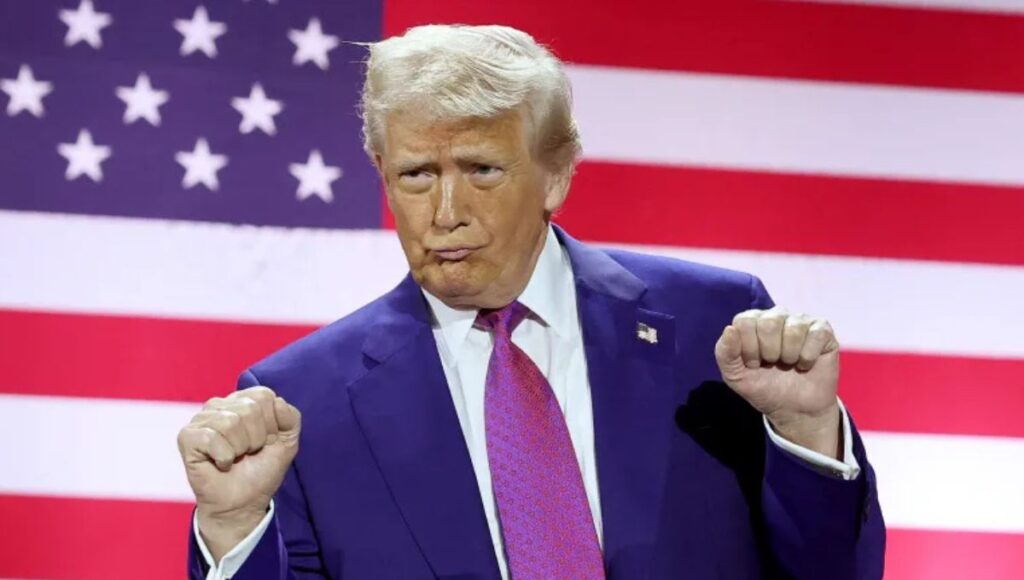
The President of the United States holds one of the most powerful and influential political positions in the world. As the head of state, head of government, and commander-in-chief of the armed forces, the US president plays a major role in shaping not only America’s future but also global politics and international relations.
In 2025, Donald John Trump returned to the White House as the 47th President of the United States, making history once again. His return marked one of the most remarkable political comebacks in modern American history. Having previously served as the 45th president from 2017 to 2021, Trump became only the second president in US history to win two non-consecutive presidential terms.
Let us take a detailed look at the current president of the United States, his political journey, the eligibility criteria to become president, the powers associated with the office, and some fascinating facts about Donald Trump.
Who is the Current President of the United States?
Donald J. Trump officially became the 47th President of the United States on January 20, 2025, after winning the presidential election held in November 2024. He represents the Republican Party, one of the two major political parties in the United States.
Trump’s political return drew global attention because it marked a rare moment in American history where a former president regained the presidency after leaving office. Before him, only Grover Cleveland had achieved this feat in the late 19th century.
Donald Trump first served as president from 2017 to 2021. During his first term, his administration focused heavily on immigration reforms, tax cuts, trade negotiations, strengthening border security, and reshaping America’s foreign policy approach. His leadership style, outspoken personality, and strong media presence made him one of the most discussed political figures in the world.
After leaving office in 2021, Trump remained one of the most influential figures in American politics. His continued support among Republican voters played a major role in his successful campaign for the 2024 presidential election.
Donald Trump’s Early Life and Background
Donald John Trump was born on June 14, 1946, in Queens, New York City. He was the fourth of five children born to real estate developer Fred Trump and Mary Anne MacLeod Trump.
Trump attended the New York Military Academy before studying economics at the Wharton School of the University of Pennsylvania. After graduating, he joined his father’s real estate business and later expanded it into a globally recognized brand.
Over the years, Trump became famous as a businessman, real estate developer, and television personality. He developed luxury hotels, golf courses, casinos, and skyscrapers bearing the Trump name.
Before entering politics, he was widely recognized for hosting the reality television show “The Apprentice,” where his catchphrase “You’re fired!” became internationally popular.
What Political Party Does Donald Trump Belong To?
Donald Trump currently belongs to the Republican Party. However, one of the interesting aspects of his political journey is that he has been associated with different political affiliations over the years.
At various points in his life, Trump identified as a Democrat, an Independent, and eventually a Republican. Despite these changes, he emerged as one of the most dominant leaders within the Republican Party during the 21st century.
The Republican Party, often referred to as the GOP (Grand Old Party), generally supports conservative policies, lower taxes, stronger national defense, and limited government intervention in economic matters.
Trump’s political ideology is often associated with economic nationalism, strict immigration policies, and the “America First” approach.
Eligibility Criteria to Become the President of the United States
The US Constitution clearly outlines the qualifications required for a person to become president. These rules are designed to ensure that only eligible citizens can hold the nation’s highest office.
The following are the constitutional requirements:
1. Minimum Age Requirement
A candidate must be at least 35 years old to become president of the United States.
This rule ensures that presidential candidates possess sufficient maturity, leadership experience, and understanding of national affairs.
2. Natural-Born Citizen Requirement
The candidate must be a natural-born citizen of the United States.
This means the person must be born as a US citizen and cannot become president through naturalization later in life.
3. Residency Requirement
A presidential candidate must have lived in the United States for at least 14 years.
This condition ensures that the candidate has a strong connection to the country and understands its political and social environment.
Presidential Term Limits in the United States
The president of the United States serves a four-year term.
A person can serve a maximum of two terms as president. These terms may be consecutive or non-consecutive.
This limitation was established through the 22nd Amendment to the US Constitution after Franklin D. Roosevelt served four terms as president.
The purpose of the term limit is to prevent excessive concentration of power and maintain democratic balance within the government.
Main Powers of the President of the United States
The US president possesses extensive executive powers. While the Constitution establishes checks and balances among the branches of government, the presidency remains one of the strongest political offices globally.
Here are some of the most important powers held by the president:
1. Commander-in-Chief of the Armed Forces
The president serves as the commander-in-chief of the United States military, including the Army, Navy, Air Force, Marine Corps, and Space Force.
This role gives the president authority over military operations and national defense decisions.
However, only Congress has the power to officially declare war.
2. Power to Sign or Veto Laws
When Congress passes legislation, the president can either sign the bill into law or veto it.
If the president vetoes a bill, Congress can still override the veto, but it requires a two-thirds majority vote in both the House of Representatives and the Senate.
This system ensures a balance of power between the executive and legislative branches.
3. Conducting Foreign Policy
The president acts as the primary representative of the United States in international affairs.
He meets foreign leaders, negotiates treaties, attends global summits, and shapes diplomatic relations with other nations.
The president also appoints ambassadors and works closely with the Secretary of State on foreign policy matters.
4. Appointment Powers
The president has the authority to appoint important government officials, including cabinet members, ambassadors, and federal judges.
One of the most significant responsibilities is appointing judges to the Supreme Court of the United States.
These appointments can influence American law and constitutional interpretation for decades.
5. Executive Orders
The president can issue executive orders to direct federal agencies and manage government operations.
Executive orders allow presidents to implement policies without requiring immediate approval from Congress, although courts can review them.
The White House: Home of the President
The official residence and workplace of the president is the White House, located at 1600 Pennsylvania Avenue in Washington, D.C.
The White House is one of the most recognizable buildings in the world and serves as the center of executive leadership in the United States.
John Adams became the first US president to live in the White House in 1800.
Today, the building includes the president’s residence, offices, meeting rooms, and spaces used for official ceremonies and diplomatic events.
Interesting Facts About Donald Trump
Donald Trump remains one of the most unique and controversial figures in American political history. Here are some interesting facts about him:
1. Trump is a Teetotaler
Donald Trump has stated multiple times that he has never consumed alcohol, smoked cigarettes, or used drugs.
He has explained that this decision was influenced by the death of his older brother, Fred Trump Jr., who struggled with alcohol addiction.
2. He Had Multiple Political Affiliations
Before becoming a Republican leader, Trump had political connections with the Democratic Party and also identified as an Independent at different times.
His political evolution reflects the changing nature of his views over the decades.
3. He Made History with Non-Consecutive Terms
Trump became the second president in US history after Grover Cleveland to serve two non-consecutive presidential terms.
This achievement places him in a unique category within American political history.
4. Trump Was Impeached Twice
Donald Trump is the first president in US history to be impeached twice by the House of Representatives.
However, in both cases, the Senate voted to acquit him, allowing him to remain eligible for future political office.
Conclusion
The presidency of the United States remains one of the most influential positions in the modern world. From commanding the military to shaping international diplomacy and influencing domestic policies, the US president holds enormous responsibility.
Donald J. Trump’s return as the 47th President of the United States has once again placed him at the center of global attention. His political journey, leadership style, and historic comeback continue to shape discussions in American politics and beyond.
Understanding the eligibility criteria, powers, and constitutional responsibilities of the president helps provide a clearer picture of how the American political system functions. At the same time, Donald Trump’s career demonstrates how political influence, public support, and persistence can significantly impact the course of history.
As the United States moves forward under its 47th president, the world will continue watching how the nation’s leadership influences global politics, economics, and international relations in the years ahead.