Ghee is one of the oldest and most treasured dairy products in the world, especially in Indian households where it has been used for centuries in cooking, wellness practices, and religious traditions. Known for its rich aroma, golden colour, smooth texture, and nutty flavour, ghee occupies a special place in Indian cuisine and culture.
In recent years, ghee has gained international popularity as more people around the world discover Indian food, Ayurvedic practices, and traditional cooking fats. From professional chefs to fitness enthusiasts, many now consider ghee a premium cooking ingredient because of its flavour, versatility, and high smoke point.
Unlike regular butter, ghee undergoes a slow heating process that removes water and milk solids, leaving behind pure butterfat. This gives ghee its long shelf life, distinct aroma, and ability to withstand high cooking temperatures.
Today, ghee is used not only in Indian curries and sweets but also in modern recipes, wellness diets, and gourmet kitchens across the globe.
What Is Ghee Called in English?
In English, ghee is commonly known as clarified butter.
Clarified butter is made by heating butter slowly until the water evaporates and the milk solids separate from the fat. However, traditional ghee is cooked longer than standard clarified butter, allowing the milk solids to caramelize slightly. This extra cooking process gives ghee its:
- Deep golden colour
- Rich nutty aroma
- Enhanced flavour
- Longer shelf life

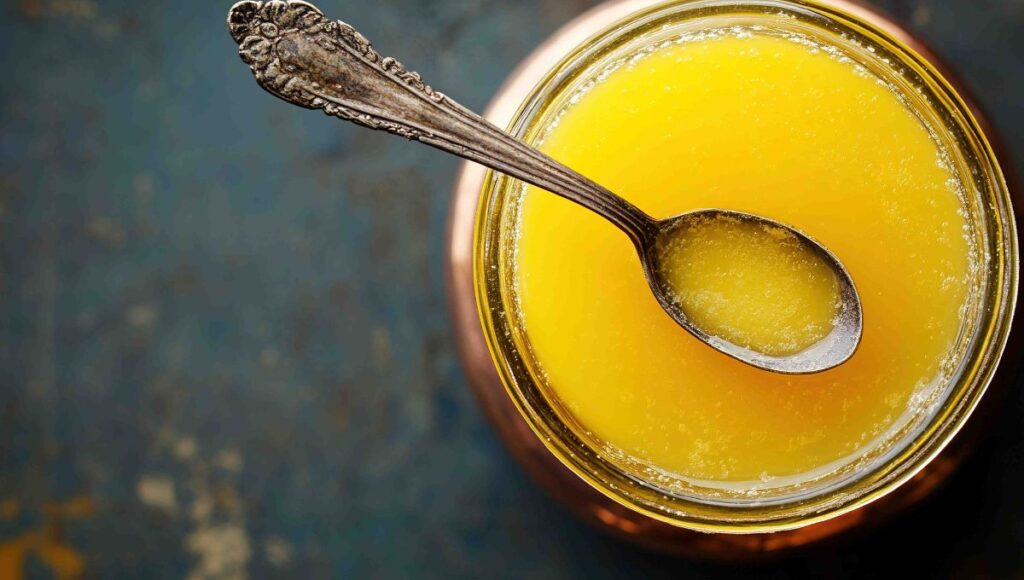
Although the terms “ghee” and “clarified butter” are often used interchangeably, traditional Indian ghee has a stronger aroma and more developed taste due to the longer cooking method.
Today, the word “ghee” itself has become globally recognized, especially in health, culinary, and wellness communities.
History and Cultural Importance of Ghee
Ghee has been used in India for thousands of years and holds deep significance in Indian culture, cuisine, and spirituality.
Ancient Indian texts, including Ayurvedic scriptures, mention ghee as a valuable food ingredient and medicinal substance. It has traditionally been associated with:
- Purity
- Nourishment
- Prosperity
- Sacred rituals
In Indian homes, ghee is often considered more than just a cooking fat. It is used during:
- Religious ceremonies
- Temple offerings
- Festivals
- Traditional cooking
- Ayurvedic practices
Even today, many Indian families prepare homemade ghee using traditional methods passed down through generations.
How Is Ghee Made?
The process of making ghee is simple but requires patience and careful heating.
Step 1: Start With Butter
Traditionally, unsalted butter is used to prepare ghee. Some households use cultured butter made from curd for a richer flavour.
Step 2: Slow Heating
The butter is heated slowly over low to medium heat.
As the butter melts:
- Water begins to evaporate
- Foam forms on the surface
- Milk solids separate from the fat
Step 3: Caramelization
The milk solids settle at the bottom and slowly brown. This stage is important because it creates ghee’s characteristic nutty aroma.
Step 4: Straining
The golden liquid fat is filtered to remove the browned milk solids.
Step 5: Storage
The final product is stored in clean containers where it can last for months without refrigeration when stored properly.
The slow cooking process is what makes ghee unique compared to ordinary clarified butter.
Difference Between Butter and Ghee
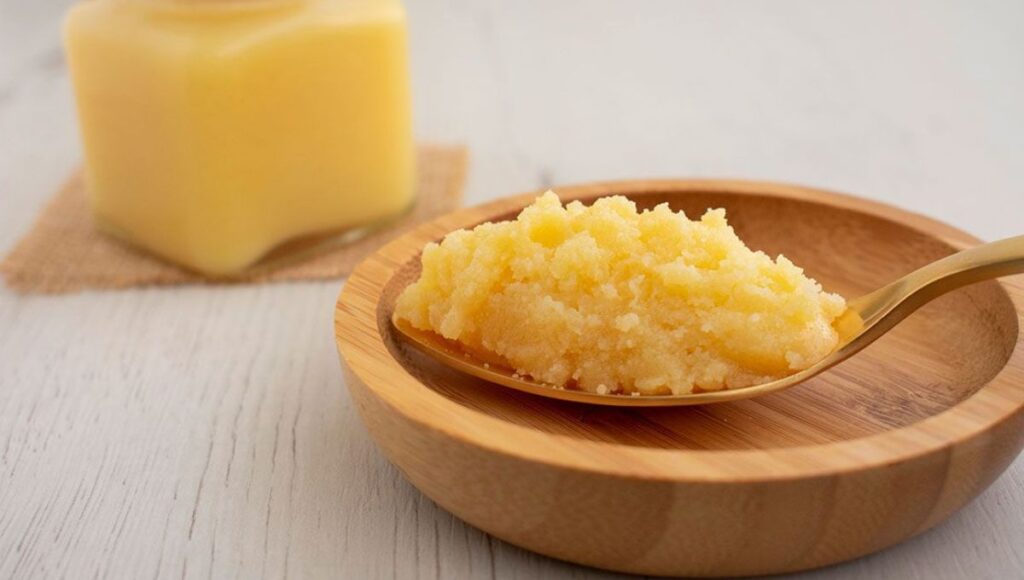
Although both butter and ghee come from milk fat, they are very different in composition, cooking performance, and shelf life.
| Feature | Butter | Ghee |
|---|---|---|
| Contains Water | Yes | No |
| Contains Milk Solids | Yes | Mostly Removed |
| Smoke Point | Lower | Higher |
| Shelf Life | Shorter | Longer |
| Flavour | Creamy | Nutty and Rich |
| Cooking Suitability | Moderate Heat | High Heat |
| Texture | Soft | Smooth and Oily |
Higher Smoke Point
One of the biggest advantages of ghee is its high smoke point. This means it can tolerate higher temperatures before burning.
Because of this, ghee is ideal for:
- Frying
- Roasting
- Sautéing
- Tempering spices
Butter burns faster because its milk solids scorch at high temperatures.
Longer Shelf Life
Since water and milk solids are removed, ghee remains stable for much longer than butter.
Traditionally, ghee was widely used in Indian homes partly because it could be stored safely for extended periods without refrigeration.
Nutritional Profile of Ghee
Ghee is primarily composed of fat and contains several fat-soluble vitamins.
Healthy Fats
Ghee contains saturated fats along with small amounts of monounsaturated fats.
Fat-Soluble Vitamins
It contains vitamins such as:
- Vitamin A
- Vitamin D
- Vitamin E
- Vitamin K
Energy Source
Since it is concentrated fat, ghee provides a high amount of energy.
Butyric Acid
Ghee contains butyric acid, a short-chain fatty acid that has gained attention in nutritional studies.
Because of its richness, ghee is usually consumed in moderate quantities as part of balanced diets.
Uses of Ghee in Indian Cooking
Ghee is one of the most versatile ingredients in Indian cuisine.
Used in Curries
Many Indian curries use ghee for tempering spices and enhancing flavour.
Essential for Indian Sweets
Traditional sweets such as:
- Halwa
- Laddoo
- Mysore Pak
- Peda
- Barfi
often rely on ghee for richness and aroma.
Used in Rice Dishes
Ghee is commonly added to:
- Biryani
- Pulao
- Khichdi
to improve taste and texture.
Popular With Breads
Indian breads such as:
- Paratha
- Naan
- Roti
are often brushed with ghee before serving.
Tempering and Roasting
In Indian cooking, hot ghee is used to roast spices and create tempering for dishes like dal and sambar.
Used in Modern Recipes
Today, chefs worldwide use ghee in:
- Grilled vegetables
- Roasted meats
- Keto recipes
- Coffee blends
- Fusion dishes
Ghee in Ayurveda and Traditional Wellness
In Ayurveda, ghee is considered an important ingredient with nourishing properties.
Traditionally, it has been used in:
- Herbal preparations
- Massage therapies
- Detox practices
- Balanced diets
Ayurvedic practitioners often describe ghee as a carrier that helps transport herbs and nutrients in certain formulations.
While modern scientific studies on some traditional claims continue, ghee remains highly respected in Ayurvedic traditions.
Why Ghee Is Becoming Popular Worldwide
The global popularity of ghee has increased significantly in recent years due to several reasons.
Interest in Traditional Foods
People are increasingly exploring traditional cooking ingredients with minimal processing.
Keto and Low-Carb Diets
Ghee has become popular among followers of ketogenic and low-carb diets because it is rich in fat.
Lactose Concerns
Since most milk solids are removed, some people who are sensitive to dairy prefer ghee over butter.
Rich Culinary Flavour
Professional chefs value ghee because it adds depth and richness to dishes.
Natural Cooking Fat
Many consumers now prefer traditional fats over heavily processed alternatives.
Interesting Facts About Ghee
1. Ghee Has Been Used for Thousands of Years
Ghee has ancient origins and has been part of Indian civilization for centuries.
2. It Is Common in Religious Rituals
Ghee is often used in lamps, offerings, and sacred ceremonies across India.
3. Ghee Has a Higher Smoke Point Than Butter
Its ability to handle high heat makes it ideal for frying and roasting.
4. It Can Last for Months
Properly stored ghee has an impressive shelf life compared to regular butter.
5. Homemade Ghee Is Still Popular
Many families continue making ghee at home because of its fresh aroma and taste.
6. Ghee Is Used in Ayurveda
Traditional Ayurvedic systems have used ghee in wellness practices for generations.
7. It Adds Richness to Food
Even small amounts of ghee can significantly enhance flavour and aroma.
8. India Is One of the Largest Consumers of Ghee
Ghee remains a staple ingredient in millions of Indian households.
How to Store Ghee Properly
Proper storage helps maintain ghee’s quality and freshness.
Keep It in Airtight Containers
Use clean, dry containers to prevent contamination.
Avoid Moisture
Water can reduce shelf life, so always use dry spoons.
Store Away From Direct Sunlight
A cool, dark place helps preserve flavour and texture.
Refrigeration Is Optional
In many climates, ghee can be stored outside the refrigerator for extended periods.
How to Identify Good Quality Ghee
High-quality ghee usually has:
- Golden yellow colour
- Pleasant nutty aroma
- Smooth texture
- Rich taste
Pure ghee should melt easily when heated and should not contain artificial flavours or excessive additives.
Homemade Ghee vs Store-Bought Ghee
Homemade Ghee
- Fresh aroma
- Traditional taste
- Greater control over ingredients
Store-Bought Ghee
- Convenient
- Easily available
- Longer packaged shelf life
Both forms are widely used depending on preference and convenience.
Ghee in Modern Global Cuisine
Today, ghee is no longer limited to Indian kitchens.
International chefs use it in:
- Baking
- Roasting
- Gourmet sauces
- Paleo diets
- High-heat cooking
Its versatility and flavour profile have made it popular in restaurants and health-conscious households worldwide.
Common Myths About Ghee
“Ghee and Butter Are the Same”
While related, ghee undergoes additional cooking and purification.
“Ghee Spoils Quickly”
Properly stored ghee can last much longer than butter.
“Ghee Is Only Used in Indian Food”
Today, ghee is used globally in many cuisines and diets.
Conclusion
Ghee, or clarified butter, is far more than just a cooking ingredient. It is deeply connected to Indian culture, traditional cuisine, wellness practices, and centuries of culinary heritage.
Known for its rich flavour, golden colour, long shelf life, and high smoke point, ghee continues to remain one of the most valued dairy products in kitchens around the world. Whether used in curries, sweets, breads, roasting, or modern health-focused recipes, ghee brings depth, aroma, and richness to food.
As interest in traditional and natural foods continues to grow globally, ghee has successfully moved from being a regional staple to an internationally appreciated super ingredient. Its timeless appeal, nutritional richness, and versatility ensure that ghee will continue to remain an essential part of cooking and food culture for generations to come.