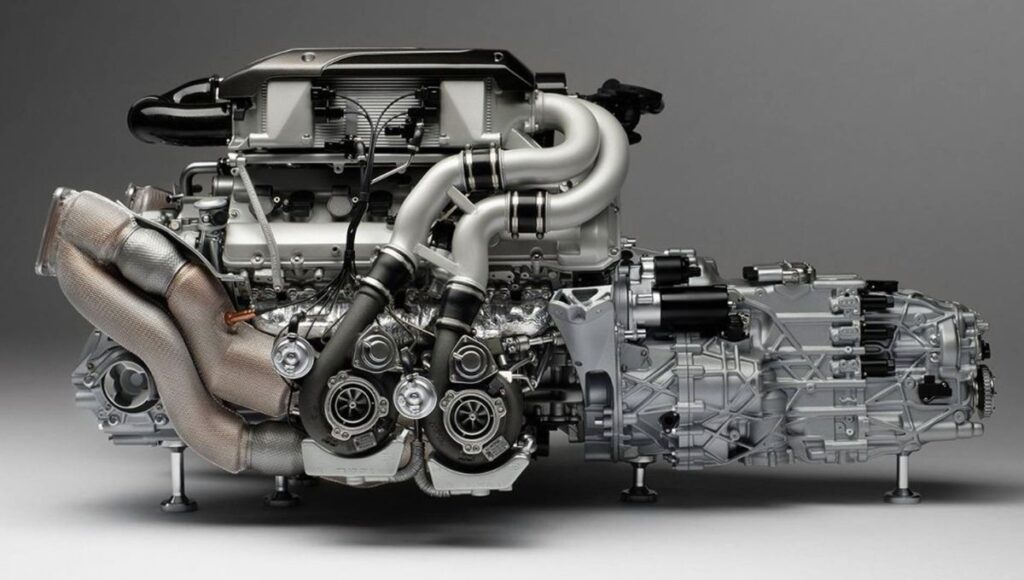
“Reports of my death have been greatly exaggerated.”
— Mark Twain
Few quotes capture the state of today’s automotive industry better than these famous words. For nearly a decade, the world was told that the internal combustion engine — the technology that powered the automobile revolution for more than 100 years — was nearing extinction.
Governments announced aggressive deadlines to ban gasoline and diesel vehicles. Automakers unveiled ambitious electric vehicle roadmaps. Analysts predicted that battery-powered cars would dominate roads by the mid-2020s. Headlines screamed about “the end of the ICE age.”
But in 2026, reality looks very different.
Electric vehicles are growing, but not at the speed many expected. Consumer behavior, infrastructure challenges, economic realities, and evolving technologies have reshaped the global automotive conversation. Instead of disappearing, the internal combustion engine (ICE) has adapted, evolved, and found a new role in the future of mobility.
Welcome to ICE 2.0 — a smarter, cleaner, more efficient version of the engine that refuses to die.
The EV Revolution Has Hit Real-World Limits
There is no doubt that electric vehicles represent a major technological leap. They offer instant torque, lower tailpipe emissions, quieter driving experiences, and reduced dependence on fossil fuels. Governments and automakers invested billions into accelerating EV adoption, expecting a rapid transition away from gasoline-powered cars.
However, the real world has proven more complicated.
Over the last few years, several global automakers have slowed down or revised their EV strategies. Companies that once promised fully electric lineups are now extending the life of combustion and hybrid models. Many manufacturers discovered that consumer demand for EVs was growing unevenly across markets.
Several factors contributed to this slowdown:
- High battery production costs continue to make EVs expensive for average buyers.
- Charging infrastructure remains insufficient in many regions.
- Long charging times still inconvenience many consumers.
- Range anxiety remains a psychological barrier.
- Electricity grids in several countries are not fully prepared for mass EV adoption.
- Used EV values often depreciate faster than traditional vehicles.
Even premium EV makers have faced increasing pressure. Competition has intensified, particularly from low-cost Chinese electric vehicle manufacturers. Consumers are also becoming more cautious, especially in uncertain economic conditions where affordability matters more than technological hype.
The result is not the collapse of electric vehicles — far from it. Instead, it is the realization that the global automotive transition will take much longer than expected.
Why the Internal Combustion Engine Still Dominates
Despite years of predictions about its demise, the internal combustion engine remains the backbone of global transportation.
There are currently well over a billion ICE-powered vehicles operating worldwide. Replacing that massive ecosystem is not something that can happen overnight.
One major reason is infrastructure. Gas stations are everywhere. Refueling takes only a few minutes. Repair networks are well established. Mechanics understand combustion engines deeply, and spare parts are widely available.
For millions of consumers, especially in developing economies, ICE vehicles remain the most practical and affordable option.
Modern combustion engines have also improved dramatically compared to older generations. Today’s engines are:
- More fuel-efficient
- Cleaner in emissions
- Smaller yet more powerful
- Integrated with intelligent software systems
- Paired with advanced transmissions and hybrid technologies
Turbocharging, direct fuel injection, mild hybrid systems, variable valve timing, and lightweight engineering have significantly enhanced ICE performance and efficiency.
The idea that gasoline engines are outdated no longer matches reality. Modern ICE technology is smarter and cleaner than ever before.
Hybrids Are Becoming the Real Transition Technology
While the EV conversation grabbed headlines, hybrid vehicles quietly emerged as one of the industry’s most practical solutions.
Hybrids combine electric motors with internal combustion engines, offering the best aspects of both technologies.
Drivers benefit from:
- Better fuel efficiency
- Lower emissions
- Reduced fuel consumption
- No range anxiety
- No dependence on charging infrastructure
Unlike fully electric vehicles, hybrids can operate without requiring constant access to charging stations. This makes them especially attractive in countries where charging networks are still developing.
Automakers around the world are increasingly shifting focus toward hybrid systems. Many companies now view hybrids not as temporary compromises, but as long-term solutions capable of meeting stricter environmental regulations while remaining practical for consumers.
Plug-in hybrids are also gaining popularity because they allow short-distance electric driving while retaining the convenience of traditional refueling for longer journeys.
In many ways, hybrids represent the true bridge between traditional mobility and full electrification.
India’s Automotive Reality Is Different
India presents a unique case in the global mobility transformation.
On one hand, electric vehicles hold enormous strategic importance for the country. India imports a significant portion of its crude oil, making fuel dependency an economic challenge. EVs could reduce oil imports, improve energy security, and help combat urban air pollution.
India also has major opportunities in battery manufacturing, EV assembly, and component exports. The country’s cost-efficient manufacturing ecosystem positions it well to become a global player in electric mobility.
But India’s transportation needs are vastly different from those of Europe or North America.
The country has:
- Diverse driving conditions
- Large rural populations
- Uneven electricity infrastructure
- Cost-sensitive consumers
- Long-distance travel requirements
- Limited public charging networks outside major cities
For these reasons, internal combustion engines will remain essential for years to come.
Small petrol cars, diesel utility vehicles, CNG-powered fleets, and hybrid systems continue to make practical sense for millions of Indian consumers. In fact, many experts believe India’s transition will involve multiple technologies coexisting simultaneously rather than a rapid switch to fully electric mobility.
This balanced approach may ultimately prove more sustainable and economically realistic.
ICE Technology Is Still Evolving
One of the biggest misconceptions about internal combustion engines is that innovation has stopped. In reality, ICE technology continues to evolve rapidly.
Engineers are developing new ways to make combustion engines cleaner, more efficient, and more environmentally responsible.
Some major innovations include:
Advanced Hybrid Integration
Modern engines increasingly work alongside electric motors, regenerative braking systems, and intelligent power management software. This combination dramatically improves efficiency while reducing emissions.
Synthetic Fuels
Synthetic fuels, also known as e-fuels, are emerging as a promising alternative. These fuels can potentially power existing ICE vehicles with significantly lower carbon emissions.
Unlike traditional fossil fuels, synthetic fuels can be produced using renewable energy sources, making them far more sustainable.
Biofuels and Ethanol Blends
Countries like India are aggressively expanding ethanol blending programs to reduce crude oil dependency and emissions.
Flex-fuel engines capable of running on higher ethanol concentrations are becoming increasingly viable.
Hydrogen Combustion
While hydrogen fuel cells receive most of the attention, several automakers are also experimenting with hydrogen-powered combustion engines. These systems maintain many advantages of traditional engines while producing fewer harmful emissions.
Cleaner Combustion Technologies
Advanced combustion techniques, improved catalytic converters, particulate filters, and precision fuel delivery systems are significantly reducing pollutants from modern engines.
The ICE engine of 2026 is fundamentally different from the engines of previous decades.
Consumers Still Value Freedom and Convenience
One major factor often overlooked in the EV debate is consumer psychology.
People value flexibility, reliability, and convenience.
For many buyers, the ability to quickly refuel anywhere remains a major advantage. Long-distance travelers, commercial fleet operators, rural drivers, and consumers without home charging facilities often find ICE or hybrid vehicles more practical.
Affordability also remains critical.
While EV prices are gradually decreasing, they still remain out of reach for many middle-class consumers globally. Battery replacement concerns and uncertain resale values further complicate purchasing decisions.
Meanwhile, combustion vehicles continue to offer predictable ownership experiences backed by decades of proven reliability.
Consumers are not rejecting electric vehicles — they are simply demanding realistic solutions that fit their lifestyles and budgets.
The Future Will Not Belong to One Technology
Perhaps the biggest lesson from the past few years is that the future of mobility will not be dominated by a single solution.
Instead, the automotive industry is moving toward a multi-technology ecosystem where different powertrains coexist.
This future may include:
- Fully electric vehicles in urban environments
- Hybrids for mainstream consumers
- Hydrogen systems for commercial transport
- Advanced combustion engines for long-distance and heavy-duty applications
- Biofuels and synthetic fuels for sustainability
Different countries and markets will adopt technologies at different speeds based on their infrastructure, economy, geography, and consumer needs.
Attempting to force a single global solution may create more problems than it solves.
Competition between technologies drives innovation. Diversity in mobility solutions increases resilience and consumer choice.
The Auto Industry Has Learned an Important Lesson
The last decade taught the automotive industry an important lesson: hype alone cannot replace practicality.
Predictions about the immediate death of combustion engines underestimated the complexity of global transportation systems. Cars are not smartphones that can be replaced every few years. Automotive transitions take decades because they involve infrastructure, economics, manufacturing, energy systems, and human behavior.
Electric vehicles will absolutely play a massive role in the future. Their growth is inevitable.
But the internal combustion engine is not disappearing tomorrow — and perhaps not even decades from now.
Instead, it is adapting.
Final Thoughts: Welcome to ICE 2.0
The internal combustion engine is no longer just a symbol of the past. It is evolving into a cleaner, smarter, and more integrated technology capable of coexisting alongside electric mobility.
The future of transportation is not about choosing between EVs and ICE vehicles. It is about creating a balanced ecosystem where multiple technologies solve different problems.
Rather than witnessing the end of the ICE era, the world may simply be entering its next phase.
The obituary for the internal combustion engine was written far too early.
ICE is alive.
And in many ways, it is only getting started.