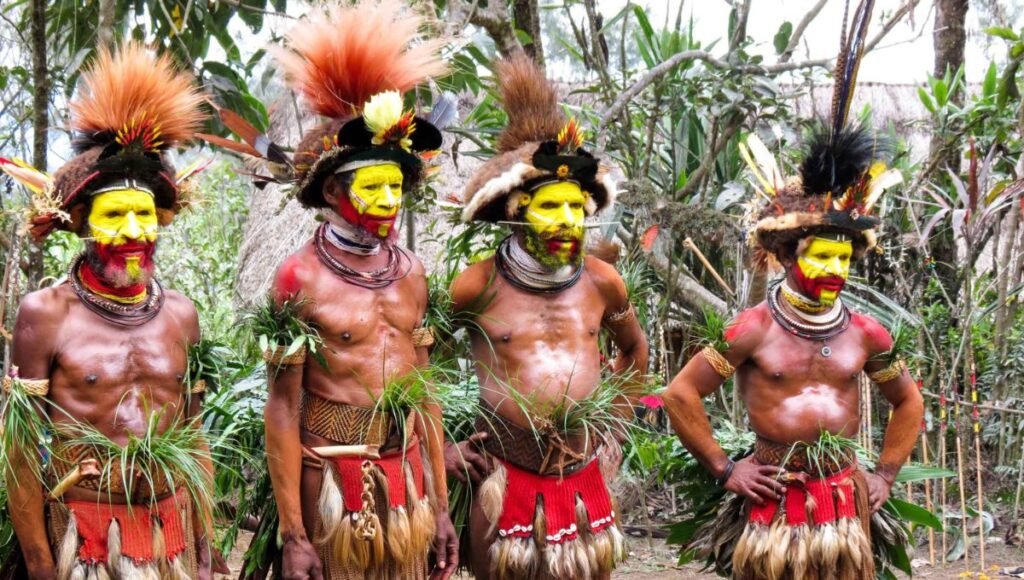
Hidden deep within the rugged mountains of Papua New Guinea lives one of the world’s most visually remarkable indigenous cultures—the Huli People. Famous for their towering ceremonial wigs, bright yellow face paint, dramatic body art, and ancient warrior traditions, the Huli have become one of the most iconic tribal communities on Earth.
Often referred to as the “Huli Wigmen,” they are instantly recognizable for their striking appearance and powerful cultural identity. Yet beyond the colorful feathers and elaborate hairstyles lies a deeply spiritual society built on discipline, community, survival, and ancestral pride.
For centuries, the Huli have lived in the remote highlands of Papua New Guinea, preserving customs and traditions that continue to survive despite the rapid spread of modernization.
Their story is not simply about appearance—it is about identity, resilience, and humanity’s enduring connection to tradition.
The Remote Highlands of Papua New Guinea
The Huli primarily inhabit the Southern Highlands and Hela Province of Papua New Guinea, a country known for its extraordinary cultural diversity and difficult mountainous terrain.
Papua New Guinea is home to hundreds of distinct ethnic groups and languages, making it one of the most culturally diverse nations in the world. Among them, the Huli stand out for both their population size and their distinctive cultural practices.
The Huli highlands are a dramatic landscape of:
- Steep mountain valleys
- Dense forests
- Rivers and swamps
- Mist-covered hills
- Fertile farming land
For generations, the rugged geography helped isolate communities from outside influence, allowing traditional lifestyles to flourish.
Even today, many Huli villages remain accessible only by rough roads or difficult footpaths through mountainous terrain.
This isolation helped preserve ancient customs that have fascinated anthropologists, photographers, and travelers for decades.
Who Are the Huli People?
The Huli are believed to number several hundred thousand people, making them one of the largest indigenous groups in Papua New Guinea.
Despite increasing contact with the modern world, many Huli communities continue to follow traditional social structures, ceremonies, and spiritual beliefs that have been passed down through generations.
Huli society is deeply organized around:
- Clan identity
- Family relationships
- Land ownership
- Ritual traditions
- Agriculture
- Spiritual customs
The land itself holds immense cultural importance.
For the Huli, the mountains, forests, rivers, and skies are connected to ancestral stories and spiritual forces that shape daily life.
Their traditions are not separate from nature—they are rooted within it.
The Famous Huli Wig Tradition
The Huli are internationally famous for one extraordinary cultural practice: the creation of elaborate ceremonial wigs.
These wigs are so central to Huli identity that the community is often referred to globally as the “Huli Wigmen.”
But these remarkable headpieces are far more than decorative costumes.
They symbolize:
- Manhood
- Discipline
- Cultural pride
- Strength
- Beauty
- Social identity
The process of becoming a wigman is long, demanding, and deeply ceremonial.
The Journey to Becoming a Wigman
Young Huli men traditionally enter a period of isolation and training to grow the hair used for their ceremonial wigs.
During this initiation period, they may live separately in special communal houses away from women and ordinary village life.
The training includes strict routines designed to promote healthy hair growth and personal discipline.
Young initiates follow specific rules involving:
- Diet
- Sleep
- Hygiene
- Grooming
- Ritual behavior
Their hair is carefully nurtured for months or even years until it reaches the proper length and quality.
Once ready, the hair is cut and expertly shaped into ceremonial wigs by skilled wig-makers.
The wigs are then decorated with spectacular ornaments such as:
- Bird of paradise feathers
- Bright flowers
- Fur
- Shells
- Leaves
- Colorful natural materials
The result is one of the most visually dramatic cultural traditions in the world.
More Than Decoration: The Meaning Behind the Wigs
For outsiders, Huli wigs may appear theatrical or ornamental.
But within Huli society, they carry deep symbolic meaning.
The wigs represent:
- Personal achievement
- Social maturity
- Warrior identity
- Clan pride
- Cultural continuity
Wearing a wig during ceremonies and festivals demonstrates honor, discipline, and connection to tradition.
The wigs also serve as expressions of artistic creativity and social status.
Every detail—from feather arrangement to hair shape—can communicate cultural meaning.
Vibrant Face Paint and Body Art
The Huli are equally famous for their vivid face paint and ceremonial body decoration.
Using natural pigments gathered from the environment, they create bold designs in striking colors such as:
- Bright yellow
- Deep red
- White
- Black
The yellow pigment, often made from clay and minerals, is especially iconic among Huli wigmen.
Paint patterns are carefully applied during ceremonies, dances, rituals, and cultural festivals.
These designs can symbolize:
- Spiritual protection
- Warrior strength
- Clan identity
- Natural forces
- Emotional expression
Combined with elaborate wigs and feather ornaments, the painted appearance of the Huli creates one of the most unforgettable visual traditions anywhere in the world.
A Deep Spiritual Connection to Nature
Like many indigenous cultures, the Huli maintain spiritual traditions deeply connected to the natural world.
Their beliefs involve ancestral spirits, sacred places, and ritual relationships with the environment.
Nature is not viewed simply as a resource to exploit.
Instead, rivers, mountains, forests, and animals often hold spiritual significance and are connected to myths and cultural history.
Traditional rituals may seek harmony between people and spiritual forces believed to influence health, weather, fertility, and community well-being.
Although Christianity has spread widely through Papua New Guinea in modern times, many Huli communities continue blending Christian beliefs with older spiritual traditions.
Farming and Daily Survival in the Highlands
Despite their global fame for ceremonial culture, most Huli people live practical, hardworking agricultural lives.
The Huli are primarily subsistence farmers who rely heavily on traditional farming techniques adapted to the mountainous environment.
Their staple crops include:
- Sweet potatoes
- Bananas
- Sugarcane
- Vegetables
- Greens
Sweet potatoes are especially important and form the foundation of the Huli diet.
The Huli developed sophisticated agricultural systems long before modern technology arrived in the region.
Gardens are carefully managed using traditional ecological knowledge passed down across generations.
The Importance of Pigs in Huli Society
Among the Huli, pigs are extremely valuable animals.
They serve not only as food but also as symbols of:
- Wealth
- Social status
- Marriage exchange
- Ceremonial importance
- Clan prestige
Pigs play central roles in major events such as:
- Weddings
- Funerals
- Conflict resolution
- Community feasts
- Ritual ceremonies
A person’s status within society can often be connected to the number of pigs they own.
Pig exchange systems help strengthen family relationships and social alliances between clans.
Warrior Traditions and Tribal Identity
Historically, warfare and territorial conflicts were significant parts of highland life in Papua New Guinea.
The Huli developed strong warrior traditions emphasizing courage, physical strength, and defense of land and clan honor.
Traditional weapons included:
- Spears
- Bows and arrows
- Clubs
- Shields
Warrior identity remains deeply embedded in ceremonial culture, even though modern conflict patterns have changed over time.
Many dances and rituals still reflect themes of bravery, strength, and ancestral protection.
The dramatic appearance of Huli wigmen—with fierce face paint, feathers, and weapons—originated partly from these warrior traditions.
Music, Dance, and Ceremony
Ceremonial gatherings are among the most important aspects of Huli cultural life.
Festivals often involve:
- Traditional singing
- Rhythmic dancing
- Drumming
- Storytelling
- Ritual performances
These ceremonies strengthen community bonds and preserve oral history.
One of the most famous cultural events featuring the Huli is the Sing-Sing festival, where different tribes across Papua New Guinea gather to celebrate their traditions through dance, costumes, and music.
At these gatherings, Huli wigmen showcase their extraordinary appearance and cultural pride to the wider world.
The Impact of Modernization
Like many indigenous communities, the Huli face growing pressures from modernization and globalization.
Roads, mining projects, mobile technology, education systems, and outside economic influences are gradually transforming traditional life in the highlands.
Modernization brings opportunities such as:
- Education
- Healthcare
- Communication
- Economic development
But it also creates challenges.
Younger generations may feel torn between traditional customs and modern lifestyles.
Some ancient practices risk disappearing as communities become more connected to urban life and global culture.
Balancing cultural preservation with modernization remains one of the greatest challenges facing the Huli today.
Tourism and Global Fascination
The Huli have become internationally famous through photography, documentaries, travel programs, and anthropological studies.
Their dramatic appearance makes them one of the most recognizable indigenous groups in the world.
Tourism has created both benefits and concerns.
Positive effects include:
- Economic opportunities
- Cultural awareness
- Global recognition
However, there are also concerns about:
- Cultural exploitation
- Stereotyping
- Commercialization of traditions
- Misrepresentation of indigenous life
Many Huli communities seek respectful tourism that values their culture rather than treating it as entertainment.
Preserving an Ancient Cultural Heritage
Efforts are increasingly being made to document and preserve Huli traditions for future generations.
Researchers, community leaders, and cultural organizations are working to protect:
- Traditional language
- Ceremonial practices
- Oral histories
- Wig-making knowledge
- Indigenous art
- Ecological knowledge
The preservation of Huli culture is important not only for Papua New Guinea but for humanity as a whole.
Indigenous cultures carry unique perspectives, knowledge systems, and historical memories that enrich the diversity of human civilization.
What the Huli Teach the Modern World
The Huli people remind us that culture is more than technology or modern infrastructure.
Identity can be expressed through:
- Art
- Ritual
- Community
- Tradition
- Spirituality
- Connection to ancestry
Their elaborate wigs and vibrant body paint are not merely performances for outsiders.
They are symbols of belonging, pride, and continuity.
In a rapidly globalizing world where many traditional cultures are disappearing, the Huli stand as powerful guardians of indigenous heritage.
A Living Symbol of Cultural Pride
The Huli Wigmen remain one of the world’s most extraordinary examples of cultural resilience and artistic expression.
Their towering wigs, brilliant face paint, and ancestral traditions reflect centuries of history preserved in the highlands of Papua New Guinea.
But beneath the spectacular appearance lies something even more powerful—a society deeply rooted in identity, discipline, family, spirituality, and respect for tradition.
The Huli are not relics of the past.
They are living communities navigating modern change while proudly protecting the customs that define who they are.
Their story is a reminder that humanity’s greatest strength lies in its diversity—and that every culture carries a unique chapter in the story of our shared human heritage.