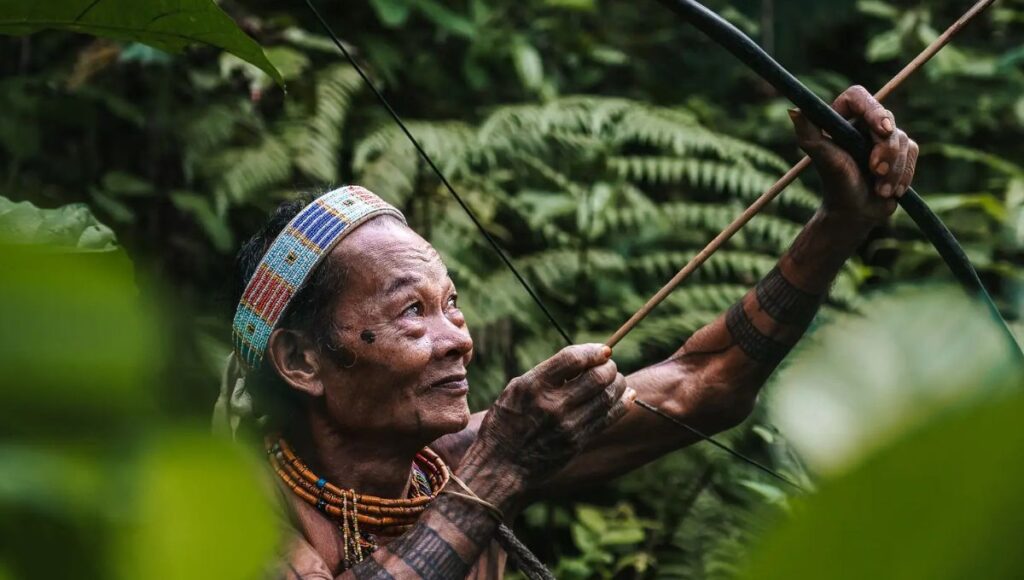
Hidden deep within the remote rainforests of the Mentawai Islands off the western coast of Indonesia lives one of the world’s most fascinating indigenous communities—the Mentawai People. Known for their sacred tattoos, spiritual traditions, jungle survival skills, and extraordinary connection with nature, the Mentawai represent one of humanity’s oldest surviving tribal cultures.
For thousands of years, the Mentawai have lived in harmony with the dense tropical forests that surround them. Long before modern civilization reached the islands, they developed a deeply sustainable way of life rooted in balance, spirituality, and respect for the natural world.
Today, despite increasing pressure from modernization, deforestation, tourism, and cultural change, many Mentawai communities continue fighting to preserve their ancestral identity.
Their story is not merely about tattoos or tribal rituals—it is about survival, resilience, and the enduring wisdom of indigenous cultures.
The Remote World of the Mentawai Islands
The Mentawai Islands are located in the Indian Ocean, separated from mainland Sumatra by rough waters and thick isolation.
This remote archipelago consists of several islands covered in dense rainforest, winding rivers, swamps, and tropical vegetation. For centuries, the geographic isolation of the islands helped protect the Mentawai from outside influence, allowing them to preserve traditions that date back thousands of years.
Even today, some Mentawai villages can only be reached after long journeys by boat and hours of trekking through muddy jungle terrain.
The rainforest is central to every aspect of Mentawai life.
It provides:
- Food
- Medicine
- Building materials
- Spiritual meaning
- Cultural identity
To the Mentawai, the forest is not simply land or property. It is a living world filled with spirits, ancestors, and sacred relationships.
A Society Built Around Community
Traditional Mentawai society revolves around close-knit communal living.
Families typically live together in large wooden longhouses known as uma. These structures are built using natural materials such as bamboo, hardwood, tree bark, and palm leaves.
Uma houses are carefully designed to suit the humid rainforest environment. Elevated floors protect against flooding and insects, while open layouts encourage ventilation and social interaction.
But the uma is far more than a physical shelter.
It serves as:
- A family home
- A ceremonial center
- A place for decision-making
- A spiritual gathering space
- A symbol of unity and kinship
Community life among the Mentawai is highly cooperative. Hunting, farming, fishing, and rituals are often carried out collectively.
Elders and shamans hold respected positions within society, helping preserve traditions and guide younger generations.
The Mentawai and the World’s Oldest Tattoo Tradition
The Mentawai are internationally famous for what many anthropologists consider one of the world’s oldest continuous tattoo cultures.
For the Mentawai, tattoos are not fashion statements or decorative trends. They are sacred symbols of identity, spirituality, status, and harmony with nature.
Every tattoo carries meaning.
Patterns may represent:
- Family lineage
- Hunting achievements
- Spiritual protection
- Personal milestones
- Social roles
- Connection to the natural world
Unlike modern tattoo culture, where designs are often chosen for style, Mentawai tattoos are deeply integrated into a person’s life journey.
Sacred Ink and Spiritual Balance
The Mentawai believe that the human body should exist in balance with the spirit world and the surrounding environment.
Tattoos help maintain this balance.
According to traditional beliefs, every person possesses a spiritual essence that must remain connected to the body. Beautiful tattoos are thought to strengthen this connection and protect individuals from harmful spirits.
The tattoos also reflect the belief that humans are part of nature rather than separate from it.
Designs inspired by:
- Plants
- Animals
- Rivers
- Forest patterns
- Natural movements
all symbolize the deep relationship between people and the rainforest.
For the Mentawai, tattooing is both art and spirituality.
Traditional Tattoo Techniques
Mentawai tattooing is an incredibly skilled and painful process performed using ancient hand-tapping techniques.
Traditional tattoo artists use sharpened sticks or metal points attached to wooden tools. Natural pigments made from soot, charcoal, and plant materials are tapped into the skin rhythmically by hand.
The process is slow and can take years to complete across the entire body.
Tattooing often begins during adolescence and continues gradually throughout adulthood as individuals achieve important milestones in life.
Different tattoos may indicate:
- Marriage
- Parenthood
- Hunting ability
- Spiritual maturity
- Leadership roles
Full-body tattoo patterns are especially respected and admired within traditional Mentawai culture.
Arat Sabulungan: The Spiritual Heart of Mentawai Life
At the center of Mentawai belief lies Arat Sabulungan, an ancient animistic spiritual system that governs relationships between humans, spirits, animals, and nature.
The phrase roughly translates to “the way of the leaves” or “belief of the leaves,” reflecting the importance of plants and nature within spiritual practice.
The Mentawai believe that spirits inhabit all things, including:
- Trees
- Rivers
- Rocks
- Animals
- Mountains
- Weather
- Ancestors
Maintaining harmony with these spiritual forces is essential for health, prosperity, and survival.
When balance is disturbed, illness, misfortune, or conflict may occur.
This worldview encourages deep respect for the environment and discourages reckless exploitation of natural resources.
The Role of the Sikerei: Mentawai Shamans
Among the most respected individuals in Mentawai society are the sikerei, traditional shamans who serve as healers, spiritual leaders, and guardians of cultural knowledge.
The sikerei play many important roles:
- Conducting rituals
- Healing illness
- Communicating with spirits
- Leading ceremonies
- Preserving oral traditions
- Guiding community decisions
Mentawai shamans are instantly recognizable by their elaborate tattoos, loincloths, bead ornaments, and ceremonial accessories.
They possess extensive knowledge of medicinal plants and herbal remedies collected from the rainforest.
For generations, the sikerei have acted as the bridge between the physical and spiritual worlds.
Daily Life in the Rainforest
Life among the Mentawai remains closely connected to the rhythms of nature.
Most communities rely on a combination of:
- Hunting
- Fishing
- Sago harvesting
- Small-scale farming
- Gathering forest products
Sago, extracted from palm trees, forms the foundation of the traditional Mentawai diet.
Other important foods include:
- Bananas
- Taro
- Coconut
- Fish
- Wild pigs
- Forest fruits
Hunting is highly respected and requires exceptional skill.
Hunters traditionally use bows and poisoned arrows crafted from natural materials. Their understanding of animal behavior, forest sounds, and jungle navigation is remarkably advanced.
The Mentawai’s survival knowledge reflects thousands of years of adaptation to rainforest life.
A Deep Understanding of Nature
One of the most remarkable aspects of Mentawai culture is their sophisticated ecological knowledge.
The Mentawai understand:
- Seasonal changes
- Medicinal plants
- Animal migration patterns
- River systems
- Forest ecosystems
- Natural healing methods
Their sustainable lifestyle has historically allowed them to live within the limits of the environment without causing widespread ecological destruction.
Many researchers believe indigenous communities like the Mentawai possess valuable environmental knowledge that modern societies increasingly overlook.
Their relationship with nature is based not on domination, but coexistence.
Colonialism and Outside Influence
For centuries, the Mentawai remained largely isolated from the outside world.
However, colonial expansion, missionary activity, and government intervention eventually began reshaping traditional life.
Dutch colonial authorities and later Indonesian government programs often viewed indigenous customs as primitive or backward.
During parts of the 20th century:
- Traditional tattoos were discouraged
- Shamanistic practices were restricted
- Communities were relocated
- Traditional clothing was banned in some areas
- Modern religions were promoted
These policies caused significant cultural disruption.
Many Mentawai were pressured to abandon ancestral traditions in favor of modernization and assimilation.
Logging, Deforestation, and Environmental Threats
One of the greatest threats facing the Mentawai today is deforestation.
Logging operations and commercial exploitation of rainforest resources have damaged parts of the islands’ fragile ecosystems.
Forest destruction threatens:
- Wildlife habitats
- Traditional hunting grounds
- Medicinal plant access
- Sacred spiritual spaces
- Indigenous livelihoods
For communities whose culture depends on the rainforest, environmental destruction is not just an ecological issue—it is a cultural crisis.
The loss of the forest could mean the loss of traditional knowledge systems developed over thousands of years.
Tourism and Cultural Preservation
In recent decades, the Mentawai have attracted increasing international attention from anthropologists, photographers, documentary filmmakers, and travelers fascinated by their traditional lifestyle and tattoo culture.
Tourism has brought both opportunities and challenges.
On one hand, tourism can provide income and global awareness that helps support cultural preservation.
On the other hand, there are concerns about:
- Cultural exploitation
- Stereotyping
- Commercialization of traditions
- Disruption of local life
Some outsiders reduce the Mentawai to visual curiosities rather than understanding the depth of their culture and spirituality.
Responsible cultural tourism requires respect, sensitivity, and recognition that the Mentawai are living communities—not museum exhibits.
The Revival of Traditional Identity
Despite decades of outside pressure, many Mentawai communities are actively working to preserve and revive their cultural heritage.
There has been renewed pride in:
- Traditional tattoos
- Indigenous language
- Spiritual ceremonies
- Rainforest knowledge
- Traditional architecture
- Ancestral customs
Younger generations increasingly recognize the importance of protecting their identity in a rapidly changing world.
Community leaders and activists continue fighting for indigenous land rights and environmental protection across the islands.
Their efforts reflect a broader global movement among indigenous peoples seeking cultural survival and self-determination.
What the Mentawai Teach the Modern World
The Mentawai offer humanity far more than fascinating tattoos or exotic traditions.
Their culture carries important lessons about:
- Sustainability
- Community living
- Respect for nature
- Spiritual balance
- Cultural resilience
- Human connection to the environment
In many modern societies, rapid industrialization and consumerism have weakened humanity’s relationship with nature.
The Mentawai remind us that humans once lived with far deeper awareness of ecological balance and interdependence.
Their traditions challenge modern assumptions about progress and success.
A Living Legacy of Ancient Wisdom
The Mentawai are among the last indigenous rainforest cultures preserving ancient ways of life that stretch back thousands of years.
Their tattoos tell stories written on skin. Their forests hold generations of knowledge. Their rituals preserve spiritual traditions shaped long before the modern world existed.
Yet the Mentawai are not relics of the past.
They are living people navigating enormous modern challenges while striving to protect their heritage, land, and identity.
In an increasingly globalized world where many traditional cultures are disappearing, the Mentawai stand as powerful guardians of humanity’s ancestral wisdom.
Their story is one of endurance, cultural pride, and the timeless connection between people and the natural world.