India’s automobile industry stands at a critical crossroads. On the surface, the market appears healthy. SUVs dominate headlines, premium vehicles are selling in record numbers, and automakers continue launching feature-loaded models aimed at affluent buyers. But beneath this apparent success lies a structural weakness that could hurt the long-term stability of the industry: the decline of the entry-level car segment.
For decades, small affordable cars formed the backbone of India’s automotive growth story. They introduced millions of families to car ownership, expanded mobility across the country, and created lifelong brand loyalty for manufacturers. Today, however, that foundation is weakening rapidly.
Veteran industry leader R. C. Bhargava recently emphasized an important truth: sustainable growth in the automobile industry is impossible without the revival of entry-level car sales. His observation deserves serious attention because the health of the Indian car market ultimately depends on the strength of its base.
At present, the market resembles an inverted structure — heavily dependent on premium vehicles and SUVs while affordable small cars continue to lose relevance. For a healthy and balanced industry, the market must resemble a pyramid, with a broad and stable entry-level foundation supporting growth at higher levels.
The decline of small cars is not merely a sales issue. It reflects changing market priorities, evolving consumer aspirations, and a growing disconnect between automakers and first-time buyers. If the industry wants long-term sustainability, it must rediscover the importance of entry-level mobility.
The Shrinking Entry-Level Segment
A decade ago, entry-level hatchbacks were the lifeblood of India’s automotive market. Models such as the Maruti Suzuki Alto, Hyundai Eon, and Renault Kwid attracted first-time buyers in huge numbers.
These vehicles were affordable, fuel-efficient, easy to maintain, and perfectly suited for Indian roads and family needs. For many households, owning a small car represented progress, aspiration, and upward mobility.
Today, that momentum has slowed dramatically.
Rising vehicle costs, stricter safety norms, increased insurance premiums, and regulatory changes have pushed entry-level cars beyond the reach of many buyers. Meanwhile, automakers themselves have shifted focus toward higher-margin SUVs and premium models.
The result is a dangerous imbalance.
While premium vehicles generate better profits, they cater to a relatively smaller customer base. The long-term growth of the industry depends on continuously bringing new customers into the market. Without affordable entry points, that pipeline begins to weaken.
India Is Still a Small-Car Market at Heart
Despite the SUV boom, India remains fundamentally a value-conscious market.
Millions of consumers still prioritize:
- Affordability
- Fuel efficiency
- Low maintenance costs
- Practicality
- Ease of driving in congested cities
Small cars make perfect sense for Indian conditions. Narrow roads, crowded urban environments, rising fuel prices, and parking challenges all favor compact vehicles.
More importantly, India’s middle class continues to expand. Young professionals, first-time salaried employees, small business owners, and rural households still aspire to own cars. But many of them are now finding new vehicles financially out of reach.
This creates a worrying trend where two-wheelers remain the default option for families that might otherwise transition into entry-level cars.
A healthy entry-level car market is not only good for automakers — it is essential for broader economic mobility and safer transportation.
The Biggest Problem: Entry-Level Cars Have Lost Aspiration
One of the main reasons for the segment’s decline is not just pricing — it is perception.
Modern entry-level cars often lack excitement and aspiration.
They are marketed primarily as practical machines rather than lifestyle products. Yet consumers rarely make buying decisions based purely on logic. Emotional appeal matters enormously.
People want products that make them feel proud.
A first car is often an emotional milestone. It represents achievement, independence, and social progress. If entry-level cars fail to create emotional excitement, consumers naturally begin stretching budgets toward larger and more aspirational vehicles.
This is where the automotive industry has lost direction.
Manufacturers have become so focused on premiumization that they no longer market small cars with the same passion and creativity they once did.
The Two-Wheeler Industry Understands Aspiration Better
Ironically, India’s two-wheeler industry provides a masterclass in how to market entry-level mobility.
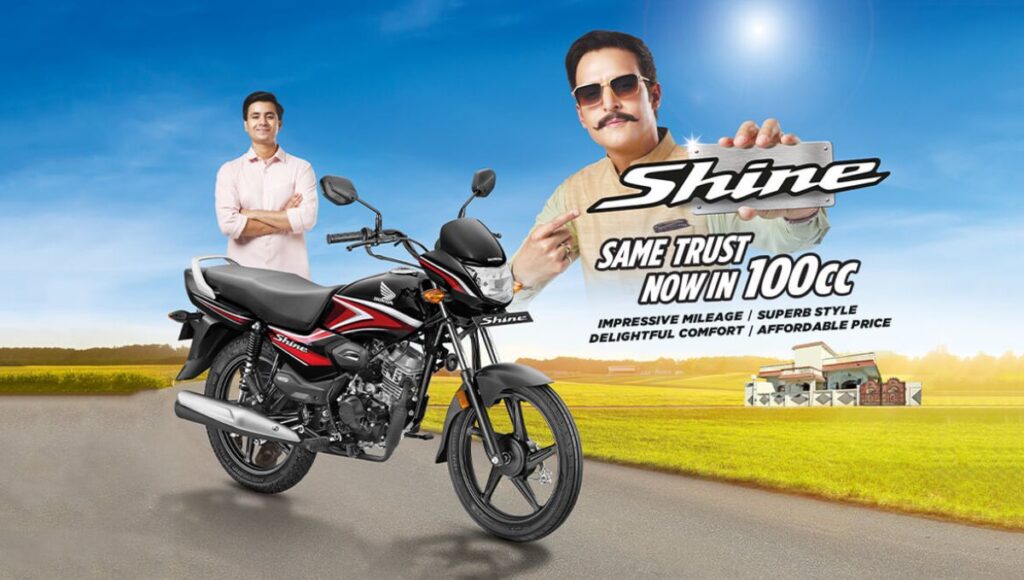
Brands consistently promote affordable scooters and commuter motorcycles with energy, emotion, and aspiration. Vehicles like the Honda Activa, Honda Shine, and TVS Sport receive continuous advertising support despite being mass-market products.
Companies understand that aspiration must be created before purchase consideration happens.
Even budget-oriented products are marketed as stylish, youthful, and empowering. Celebrities, emotional storytelling, social media engagement, and lifestyle positioning all play a major role.
For example, Alia Bhatt endorsing the Hero Pleasure was not about premium positioning. It was about making an affordable product emotionally desirable.
Car manufacturers once understood this principle too.
The Renault Kwid Lesson
When Renault India launched the Renault Kwid, the company approached the market aggressively.
The Kwid did not look like a traditional budget hatchback. Its SUV-inspired styling, youthful image, and bold marketing campaign gave buyers something emotionally appealing.
The use of Ranbir Kapoor as brand ambassador added aspirational value. The campaign successfully positioned the car as trendy, modern, and exciting rather than merely affordable.
The result was remarkable success.
Unfortunately, much of that energy around entry-level cars has faded in recent years.
Discount-Based Marketing Is Not Enough
Another major issue is the overreliance on dealer-led promotions.
Today, much of entry-level car marketing revolves around:
- Cash discounts
- Exchange bonuses
- EMI offers
- Year-end clearance sales
While such tactics may increase short-term showroom traffic, they rarely build long-term aspiration or brand value.
Discounts create transactional relationships. Aspirational marketing creates emotional connections.
Consumers remember stories, experiences, and identities associated with products far more than temporary price cuts.
The industry needs to move beyond pure discounting and return to storytelling-driven marketing.
Automakers Must Make Small Cars Cool Again
If manufacturers genuinely want to revive the segment, they must invest in making entry-level cars desirable again.
That means treating small cars with the same creativity and enthusiasm reserved for premium SUVs.
Several strategies can help:
1. Stronger Design Language
Affordable cars should look bold, modern, and stylish. Young buyers care deeply about appearance and identity.
2. Personalization Options
Custom colors, graphics, accessories, and connected features can help small cars feel more premium and personal.
3. Youth-Focused Campaigns
Social media campaigns, influencer collaborations, music events, gaming tie-ins, and digital-first marketing can reconnect small cars with younger audiences.
4. Special Editions
Limited editions and themed variants create excitement and urgency even in budget segments.
5. Community Building
Brands can create ownership clubs, road trips, and user-generated content campaigns to build emotional loyalty.
Entry-level buyers should feel proud of their purchase, not like they settled for the cheapest option.
Storytelling Can Transform Perception
One of the greatest examples of effective storytelling in India’s automotive history was the famous 24-hour endurance test of the Maruti Suzuki Alto during the early 2000s.
The campaign was not just about engineering. It communicated durability, trust, and reliability in a way that consumers remembered for years.
That emotional storytelling helped make the Alto one of India’s most successful cars ever.
Today’s marketing often lacks that emotional depth.
Modern consumers are flooded with advertisements every day. Simple feature lists no longer create impact. Brands must build narratives that resonate emotionally with buyers.
Why Entry-Level Cars Matter for the Entire Industry
Some marketers hesitate to heavily promote affordable cars because they fear it may weaken premium brand positioning.
That mindset is shortsighted.
Entry-level cars are not low-value products — they are strategic investments in future customers.
A buyer who purchases a small hatchback today may eventually upgrade to a sedan, SUV, or premium model from the same brand. Entry-level products create lifelong customer relationships.
Without strong entry-level sales:
- The customer pipeline weakens
- Brand loyalty declines
- Market accessibility reduces
- Long-term industry growth slows
A healthy automotive ecosystem depends on continuous onboarding of new buyers.
The Future of Indian Mobility Needs Balance
India’s automotive future cannot rely entirely on premium SUVs.
While higher-end vehicles will continue growing, the industry also needs:
- Affordable mobility
- Entry-level accessibility
- Mass-market expansion
- Broader ownership penetration
Small cars remain one of the most efficient solutions for India’s urban challenges, fuel economy concerns, and middle-class aspirations.
They are also critical for improving road safety by encouraging families to transition from two-wheelers to four-wheelers.
Final Thoughts
The Indian automobile industry must stop viewing entry-level cars as merely budget offerings.
They are the foundation of long-term growth, brand loyalty, and market stability.
The revival of this segment will not happen automatically. It requires deliberate effort, stronger marketing, emotional storytelling, and renewed pride from automakers themselves.
Consumers do not reject small cars because they dislike practicality. They reject them when practicality comes without aspiration.
India’s automotive market needs balance. It needs a strong base to support future growth.
And that base begins with making entry-level cars exciting again.