India is a land of extraordinary cultural diversity, where every region preserves its own unique traditions, art forms, music, and storytelling practices. Among the many treasures of Indian folk culture, Yakshagana stands out as one of the most vibrant, dramatic, and visually spectacular performance traditions in the country.
Deeply rooted in the coastal districts of Karnataka, Yakshagana is much more than a theatrical performance. It is a mesmerizing blend of dance, music, dialogue, elaborate costumes, facial expressions, and spiritual storytelling. Rich in color, energy, and emotion, Yakshagana transforms ancient mythological tales into unforgettable live experiences that captivate audiences throughout the night.
For centuries, this traditional art form has served as a bridge between religion, entertainment, culture, and community life. Even in today’s rapidly modernizing world, Yakshagana continues to thrive, preserving the cultural identity of coastal Karnataka while inspiring new generations of artists and audiences.
Whether performed in village grounds under the open sky or showcased on modern stages across the world, Yakshagana remains one of India’s most remarkable living theatrical traditions.
The Origins and History of Yakshagana
The roots of Yakshagana can be traced back more than 400 years, although some scholars believe its early influences are even older.
The art form evolved primarily in the coastal and Malnad regions of Karnataka, particularly in areas such as:
- Udupi
- Dakshina Kannada
- Uttara Kannada
- Shivamogga
- Kasaragod region of present-day Kerala
Originally, Yakshagana developed as a temple-centered performance tradition connected to devotional practices and religious festivals.
Village communities organized performances as offerings to deities, and the stories were often based on:
- Hindu mythology
- The Ramayana
- The Mahabharata
- Puranic legends
Over time, Yakshagana evolved from a purely religious presentation into a popular folk theatre tradition that entertained entire communities.
Traditionally, performances were held overnight in open fields after harvest seasons or during temple festivals. Villagers would gather in large numbers to watch mythological battles, heroic tales, and dramatic dialogues unfold beneath the stars.
Despite centuries of social and cultural changes, the essence of Yakshagana has remained remarkably intact.
What Makes Yakshagana Unique?
Yakshagana is unlike any ordinary stage drama. It combines several art forms into one powerful performance experience.
The uniqueness of Yakshagana lies in its fusion of:
- Theatre
- Dance
- Music
- Poetry
- Dialogue
- Costume art
- Makeup
- Spiritual storytelling
Every performance is highly energetic and emotionally intense.
The performers do not merely act — they embody the characters through movement, voice, costume, and expression.
This immersive style makes Yakshagana one of the most visually engaging folk art forms in India.
The Powerful Storytelling Tradition
At the heart of Yakshagana lies storytelling.
The dramatic episodes performed in Yakshagana are called “prasangas.” These prasangas narrate stories of:
- Gods and goddesses
- Kings and warriors
- Demons and sages
- Moral conflicts
- Divine interventions
- Heroic battles
Most stories are adapted from Hindu epics such as:
- Ramayana
- Mahabharata
- Bhagavata Purana
- Other Puranic texts
What makes Yakshagana especially fascinating is the improvisation.
Although the storyline follows traditional scripts, actors often improvise dialogues during performances. This allows artists to:
- Add humor
- Engage directly with the audience
- Introduce social commentary
- Display wit and intelligence
This spontaneity keeps performances lively and unique every time.
The dialogues are delivered with dramatic intensity, often accompanied by powerful gestures and rhythmic movements that heighten the emotional impact.
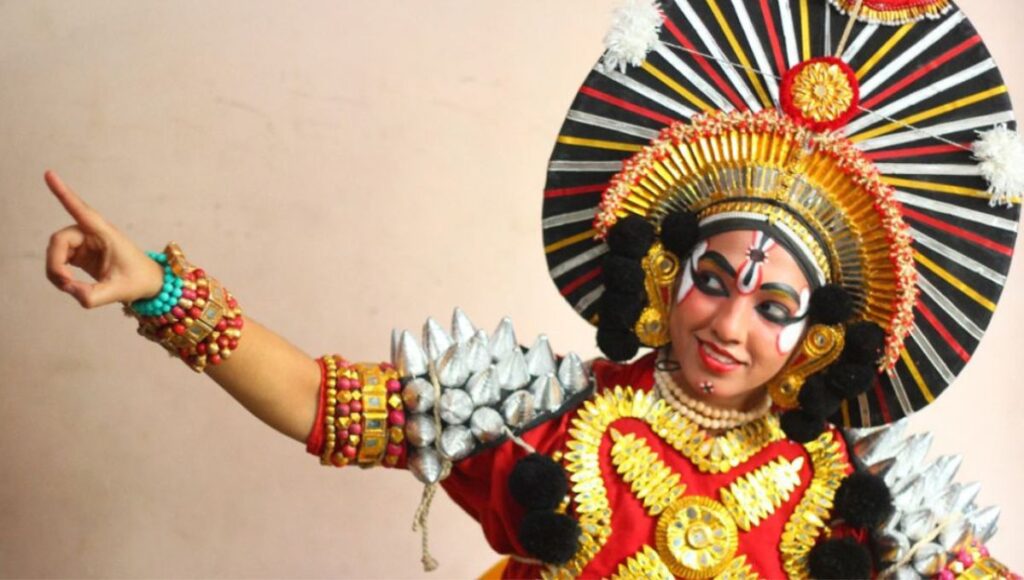
The Spectacular Costumes and Makeup
One of the most iconic aspects of Yakshagana is its extraordinary visual appearance.
The performers wear:
- Massive headgear
- Intricately designed costumes
- Elaborate ornaments
- Colorful facial makeup
Each costume is carefully designed to represent the personality and nature of the character being portrayed.
For example:
- Heroes appear majestic and powerful
- Gods radiate divine grandeur
- Demons wear fierce makeup and exaggerated facial features
- Female characters are portrayed with elegance and grace
The vibrant colors used in makeup hold symbolic meaning.
Red, black, yellow, and white shades are applied in dramatic patterns to enhance facial expressions and identify character types instantly.
The process of costume preparation itself is an art form requiring immense skill and patience. Artists often spend several hours getting ready before a performance begins.
The elaborate appearance of Yakshagana performers creates an unforgettable visual spectacle that leaves audiences mesmerized.
Music: The Soul of Yakshagana
Music forms the emotional and rhythmic foundation of Yakshagana.
Unlike silent theatrical performances, Yakshagana is deeply musical from beginning to end.
The performance is guided by a lead singer called the Bhagavata, who:
- Narrates the story
- Sings verses
- Controls the rhythm of the performance
- Guides the actors musically
The Bhagavata plays a central role because the actors synchronize their movements and dialogues according to his singing.
Traditional musical instruments used in Yakshagana include:
Chande
A loud and powerful drum that creates dramatic intensity.
Maddale
A percussion instrument similar to a classical drum that provides rhythmic balance.
Harmonium
Used in modern performances for melodic support.
The combination of rhythmic drumming, high-energy singing, and dramatic storytelling creates an electrifying atmosphere.
The music often shifts dynamically according to the mood of the scene:
- Intense battle sequences feature fast drumming
- Emotional moments use softer rhythms
- Divine scenes carry spiritual melodies
This musical richness makes Yakshagana deeply immersive.
Dance and Expressive Performance
Dance movements in Yakshagana are energetic, stylized, and emotionally expressive.
The performers use:
- Facial expressions
- Hand gestures
- Footwork
- Body movements
- Eye movements
to communicate emotions and dramatic tension.
Unlike purely classical dance forms, Yakshagana combines folk energy with theatrical freedom.
Battle scenes are especially dynamic, featuring:
- Fast spins
- Powerful jumps
- Rhythmic footwork
- Dramatic combat movements
Each character has a distinct movement style that reflects their personality.
For example:
- Demons move aggressively
- Divine characters move gracefully
- Warriors display strength and authority
This expressive physicality helps audiences connect emotionally with the story even if they do not fully understand the language.
The Two Major Styles of Yakshagana
Yakshagana is broadly divided into two major styles:
1. Badagutittu (Northern Style)
Practiced mainly in:
- Udupi
- Uttara Kannada
- Northern coastal regions
Characteristics include:
- Large and elaborate headgear
- Structured dance movements
- Strong facial makeup
- More theatrical presentation
Badagutittu emphasizes dramatic grandeur and costume detail.
2. Tenkutittu (Southern Style)
Popular in:
- Dakshina Kannada
- Kasaragod region
Characteristics include:
- Fluid dance movements
- Greater facial expression
- Lighter costumes
- Dynamic choreography
Tenkutittu is often considered more dance-oriented and expressive.
Both styles preserve the core essence of Yakshagana while showcasing regional artistic variations.
Cultural Importance of Yakshagana
Yakshagana is not merely entertainment — it is an important cultural identity of coastal Karnataka.
For generations, the art form has:
- Preserved ancient stories
- Promoted Kannada and Tulu languages
- Strengthened community bonds
- Passed traditions to younger generations
In rural areas, Yakshagana performances often become major social events where entire villages gather overnight.
The performances encourage:
- Collective participation
- Spiritual reflection
- Cultural pride
- Intergenerational learning
Yakshagana artists are highly respected because they dedicate years to mastering:
- Acting
- Music
- Dance
- Dialogue delivery
- Costume techniques
The art form also serves as an educational tool, teaching moral values, ethics, and mythological knowledge through engaging storytelling.
Yakshagana and Spirituality
Although Yakshagana is theatrical, it remains deeply connected to spirituality.
Many performances begin with prayers and ritualistic traditions.
The stories often explore themes such as:
- Dharma (righteousness)
- Devotion
- Good versus evil
- Sacrifice
- Divine justice
For audiences, watching Yakshagana is often both an artistic and spiritual experience.
Temple festivals continue to play a major role in sustaining the tradition.
Challenges in the Modern Era
Like many traditional art forms, Yakshagana faces several modern challenges.
These include:
- Declining rural audiences
- Competition from digital entertainment
- Financial struggles for artists
- Reduced attention spans among younger generations
Night-long performances, once extremely popular, are becoming less common in urban areas where audiences prefer shorter formats.
However, despite these challenges, Yakshagana has shown remarkable resilience.
Modern Adaptation and Global Reach
To remain relevant, Yakshagana has successfully adapted to changing times.
Modern efforts include:
- Shorter stage versions
- School and college workshops
- Cultural festivals
- International performances
- Social media promotion
- Digital recordings and streaming
Many organizations and artists are working to preserve and promote Yakshagana among younger audiences.
Today, Yakshagana performances are showcased not only across India but also internationally in countries with Indian diaspora communities.
Universities and cultural researchers increasingly study Yakshagana as an important example of traditional Indian theatre.
Why Experiencing Yakshagana Live Is Special
Watching Yakshagana live is a completely different experience from reading about it.
The atmosphere of a traditional overnight performance is magical:
- Loud drums echo through the night
- Performers appear in dazzling costumes
- Mythological characters come alive
- Villagers gather in excitement
- The stage radiates raw energy and emotion
The combination of sound, color, rhythm, devotion, and storytelling creates an unforgettable cultural experience.
Even people unfamiliar with the language often become deeply captivated by the visual and emotional intensity of the performance.
Conclusion
Yakshagana is one of India’s most extraordinary cultural treasures — a living theatre tradition that continues to thrive through passion, artistry, and community support.
Its unique blend of mythology, music, dance, drama, and spirituality makes it far more than mere entertainment. It is a vibrant expression of Karnataka’s cultural soul and a powerful reminder of India’s rich artistic heritage.
In a world increasingly dominated by fast digital content, Yakshagana stands as a timeless celebration of human creativity, storytelling, and tradition.
Whether witnessed in a remote coastal village under the open night sky or on a modern stage, Yakshagana leaves a lasting impression on every viewer.
It is not just a performance — it is an experience that connects people to history, devotion, art, and the enduring magic of storytelling.