
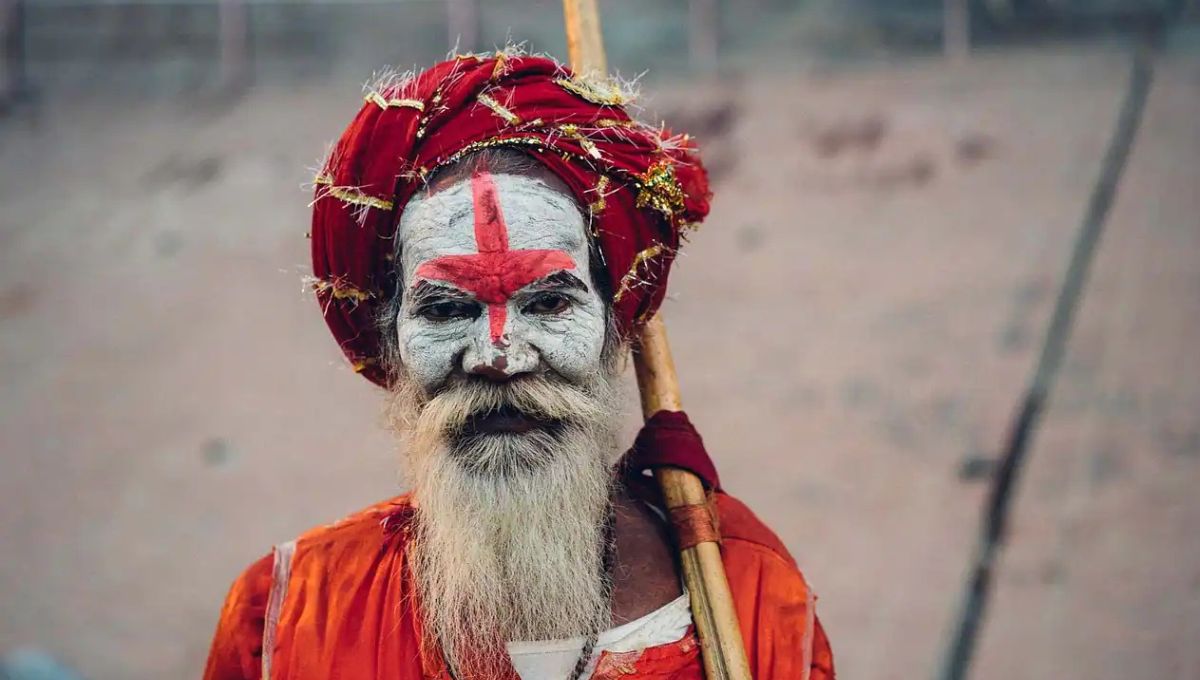
Among the many spiritual traditions of India, few are as mysterious, misunderstood, and controversial as the Aghori Sect. Often seen covered in ash, meditating near cremation grounds, carrying human skulls, and practicing rituals that challenge social norms, the Aghori have fascinated outsiders for centuries.
To some, they appear terrifying. To others, they are enlightened mystics who have transcended worldly illusion. Their practices are frequently sensationalized in popular culture, portrayed through horror stories, myths, and exaggerated rumors.
But behind the fear and mystery lies a deeply philosophical spiritual path rooted in radical non-duality, detachment, and devotion to Lord Shiva.
The Aghori are not simply ascetics seeking to shock society. They are spiritual seekers attempting to overcome the deepest human fears—death, impurity, attachment, and ego.
Their story offers a rare glimpse into one of the most extreme and misunderstood spiritual traditions in the world.
Who Are the Aghori?
The Aghori are a small sect of Hindu ascetics associated primarily with Shaivism, a major tradition within Hinduism devoted to the worship of Lord Shiva.
Their spiritual lineage traces back centuries and is often linked to the revered saint Baba Keenaram, who is considered one of the most important figures in the development of the Aghori tradition.
The word “Aghori” itself can roughly be interpreted as “fearless” or “beyond fear.”
This reflects the core of their spiritual philosophy: liberation can only be achieved by transcending all human limitations, including fear, disgust, attachment, and social conditioning.
Unlike mainstream Hindu monks who often pursue purity, discipline, and separation from worldly contamination, the Aghori deliberately confront what society avoids.
For them, spiritual enlightenment lies not in escaping darkness, but in understanding that all aspects of existence are manifestations of the divine.
The Sacred City of Varanasi
The Aghori are most strongly associated with Varanasi, one of the oldest continuously inhabited cities in the world and among Hinduism’s holiest spiritual centers.
Located on the banks of the sacred Ganges River, Varanasi is believed by Hindus to be a gateway between life and liberation.
The city is especially famous for its cremation ghats, where funeral pyres burn day and night.
For most people, cremation grounds symbolize grief, fear, and mortality.
For the Aghori, they represent truth.
The cremation ground reminds them that:
- All human beings eventually die
- Wealth and status are temporary
- The physical body is impermanent
- Attachment creates suffering
- Fear of death traps the soul in illusion
By meditating among funeral pyres, the Aghori attempt to directly confront mortality and transcend the fear that governs ordinary human life.
Why the Aghori Live Near Cremation Grounds
Perhaps the most striking image associated with the Aghori is their presence in cremation grounds.
To outsiders, this appears disturbing or frightening. But within Aghori philosophy, the cremation ground is considered one of the most spiritually powerful places in existence.
Why?
Because it strips away illusion.
At the cremation ground:
- Kings and beggars become equal
- Beauty fades
- Ego disappears
- Material wealth loses meaning
- Human identity dissolves
The Aghori believe that most people spend their lives trapped by attachment to the body, possessions, status, and social identity.
By living among death, they seek to break these attachments completely.
The ash covering their bodies often comes from funeral pyres and symbolizes the ultimate fate of all physical existence.
It serves as a constant reminder:
Everything eventually returns to dust.
The Philosophy of Non-Duality
At the heart of Aghori spirituality lies a profound philosophical principle known as non-duality.
The Aghori believe that everything in existence is part of the same universal consciousness.
In this view:
- Pure and impure are illusions
- Good and evil are human concepts
- Sacred and profane are not separate
- Life and death are interconnected
Everything is seen as an expression of Shiva, the divine consciousness underlying the universe.
This belief radically challenges conventional social and religious boundaries.
Most societies divide the world into opposites:
- Clean vs. unclean
- Holy vs. sinful
- Acceptable vs. forbidden
The Aghori reject these distinctions.
For them, enlightenment comes from realizing the unity behind all existence.
Lord Shiva and the Aghori Connection
The Aghori are deeply devoted to Lord Shiva, especially in his fierce and ascetic forms.
In Hindu tradition, Shiva is associated with:
- Destruction
- Transformation
- Meditation
- Renunciation
- Death and rebirth
Shiva himself is often depicted as dwelling in cremation grounds, covered in ash, detached from worldly concerns.
The Aghori seek to emulate this aspect of Shiva.
They believe that by embracing impermanence and transcending fear, they move closer to ultimate spiritual liberation.
Their practices are therefore not random acts of rebellion but symbolic efforts to dissolve ego and attachment.
The Use of Human Skulls and Ritual Objects
One of the most misunderstood aspects of Aghori practice is the ceremonial use of human skulls, known as kapalas.
These skulls are sometimes used as ritual bowls or symbolic objects during spiritual practices.
To outsiders, such imagery appears shocking.
However, within the Aghori tradition, the skull represents:
- Impermanence
- Mortality
- The destruction of ego
- The temporary nature of physical identity
It is important to separate documented spiritual symbolism from sensational myths often spread through media and folklore.
Popular culture frequently exaggerates Aghori practices for shock value, portraying them as dangerous or monstrous figures.
In reality, most Aghori are solitary ascetics focused primarily on meditation, discipline, spiritual rituals, and philosophical practice.
Myths and Misconceptions About the Aghori
The Aghori are among the most misunderstood spiritual groups in the world.
Over time, rumors and sensational stories have created a distorted image of their tradition.
Some myths portray them as:
- Practitioners of black magic
- Cannibals
- Violent mystics
- Occult figures
While isolated practices and symbolic rituals have contributed to their mysterious reputation, many popular claims are heavily exaggerated or misunderstood.
Most Aghori live lives centered around:
- Meditation
- Spiritual discipline
- Renunciation
- Service
- Devotion to Shiva
Some are known to work as healers or spiritual guides within local communities.
Their path is extreme, but it is fundamentally rooted in spiritual philosophy rather than horror or violence.
Renunciation and the Destruction of Ego
The Aghori believe the ego is one of the greatest barriers to enlightenment.
Human beings become trapped by:
- Pride
- Desire
- Fear
- Attachment
- Social identity
To destroy the ego, the Aghori intentionally abandon ordinary social structures.
Many renounce:
- Family ties
- Wealth
- Possessions
- Comfort
- Social status
Their appearance itself reflects detachment from worldly concerns.
The ash-covered body symbolizes transcendence of physical vanity and material identity.
Through extreme renunciation, the Aghori seek direct spiritual realization.
Meditation and Spiritual Practices
Despite their dramatic public image, much of Aghori life revolves around deep meditation and spiritual discipline.
Practices may include:
- Chanting sacred mantras
- Meditation near cremation grounds
- Yogic discipline
- Ritual worship of Shiva
- Solitary contemplation
- Fasting and austerity
Many Aghori believe that confronting fear directly leads to liberation from mental illusion.
By embracing what others reject, they seek to overcome duality and realize spiritual unity.
The Role of Compassion and Healing
Although feared by many outsiders, some Aghori are respected as spiritual healers and compassionate ascetics.
In certain communities, they are believed to possess deep spiritual knowledge and healing abilities.
Some Aghori dedicate themselves to:
- Helping the poor
- Healing the sick
- Guiding spiritual seekers
- Performing rituals for the dead
Their philosophy teaches that divine presence exists equally in all beings, regardless of status or social position.
This belief can inspire profound compassion and service.
Aghori in Modern India
Modern India presents new challenges for preserving ancient spiritual traditions.
Urbanization, technology, media attention, and tourism have all transformed how the Aghori are perceived.
Many outsiders visit Varanasi seeking encounters with Aghori ascetics, often driven by curiosity or sensationalized media portrayals.
This attention has created both fascination and misunderstanding.
Some genuine practitioners avoid publicity entirely, preferring isolation and spiritual discipline over public spectacle.
Others have become symbolic figures representing India’s mystical spiritual traditions to the wider world.
The Difference Between Spiritual Symbolism and Sensationalism
It is important to approach the Aghori with cultural sensitivity and historical understanding.
Western media and internet culture often focus only on the most shocking aspects of their practices while ignoring the deeper philosophy behind them.
The Aghori are not merely performers of strange rituals.
Their practices are symbolic attempts to answer profound spiritual questions:
- What is death?
- What is fear?
- What is the self?
- Why do humans suffer?
- Can attachment be transcended?
Whether one agrees with their methods or not, their path reflects a serious spiritual tradition rooted in centuries of philosophical thought.
Death as a Teacher
Perhaps the most important lesson of the Aghori tradition is their relationship with death.
Modern society often avoids discussions of mortality. Death is hidden, feared, and treated as something distant.
The Aghori do the opposite.
They place death at the center of spiritual contemplation.
For them, remembering mortality creates freedom.
When humans truly accept impermanence, they may become less controlled by fear, greed, ego, and attachment.
In this sense, the cremation ground becomes not a place of horror, but a place of awakening.
A Spiritual Tradition Beyond Fear
The Aghori remain one of India’s most enigmatic spiritual communities.
Their ash-covered bodies, cremation-ground meditations, and radical rejection of social boundaries continue to fascinate the world.
Yet beneath the mystery lies a deeply philosophical spiritual path focused on:
- Non-duality
- Detachment
- Liberation
- Fearlessness
- Acceptance of mortality
- Devotion to Shiva
The Aghori challenge humanity to confront uncomfortable truths about death, ego, and the temporary nature of existence.
Whether viewed with curiosity, reverence, or disbelief, they stand as a powerful reminder that spirituality can take forms far beyond ordinary understanding.
In a world driven by materialism and fear of mortality, the Aghori walk a path few would dare to follow—seeking enlightenment not by avoiding darkness, but by passing directly through it.