
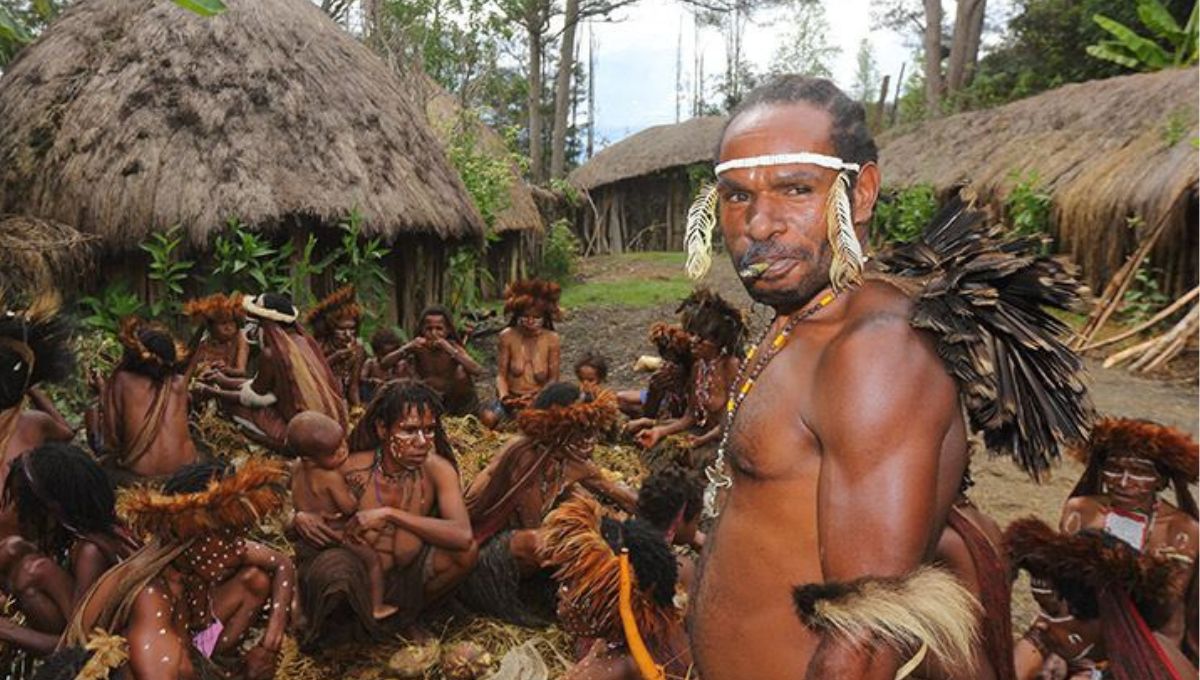
Hidden deep within the rugged highlands of Indonesia lives one of the world’s most fascinating indigenous communities—the Dani Tribe. Surrounded by towering mountains, mist-covered valleys, and dense tropical forests, the Dani people have preserved a unique way of life for centuries in one of the most isolated regions on Earth.
Known for their warrior traditions, striking tribal attire, ancient rituals, and strong cultural identity, the Dani remain among the most iconic indigenous groups in Papua. For generations, they survived almost entirely separated from the outside world, developing traditions and social systems shaped by the harsh but fertile environment of the central highlands.
Even today, despite modernization and increasing global influence, many Dani communities continue to protect their ancestral customs, language, and cultural heritage.
Their story is not merely about tribal rituals or remote mountain life. It is a story of resilience, adaptation, identity, and humanity’s deep connection to tradition and land.
The Isolated Highlands of Papua
The Dani primarily inhabit the breathtaking Baliem Valley in the central highlands of Papua, the easternmost region of Indonesia located on the island of New Guinea.
This remote mountainous landscape is one of the most dramatic environments in Southeast Asia.
The region is characterized by:
- Towering mountain ranges
- Fertile valleys
- Dense forests
- Cool highland climate
- Fast-flowing rivers
- Remote settlements
For centuries, the difficult terrain kept the Dani largely isolated from the outside world.
Until the early 20th century, most of the world had little knowledge of their existence. Significant outside contact only increased after explorers and researchers reached the Baliem Valley during the 1930s.
This long isolation allowed the Dani to preserve ancient traditions and social systems that had evolved over generations without major outside influence.
Today, the Dani remain one of Papua’s most culturally significant indigenous groups.
Who Are the Dani People?
The Dani are one of the largest indigenous ethnic groups in Papua.
Traditionally, their society revolved around:
- Agriculture
- Clan relationships
- Ritual ceremonies
- Warfare traditions
- Pig farming
- Community cooperation
The Dani developed a highly organized agricultural society despite living in remote mountainous terrain.
Unlike nomadic hunter-gatherer tribes, they built stable villages and cultivated crops using sophisticated farming systems adapted to the highlands.
Their culture reflects a strong balance between survival, spirituality, community identity, and environmental adaptation.
The Traditional Honai Houses
One of the most recognizable aspects of Dani culture is their traditional housing, known as honai.
These small round huts are carefully designed for the cool mountain climate of the Papua highlands.
Constructed using:
- Wood
- Straw
- Grass
- Thatch
- Natural fibers
the honai are simple yet highly effective structures.
The houses feature:
- Thick insulated roofs
- Low entrances
- Windowless interiors
- Circular designs that retain heat
The absence of windows helps preserve warmth during cold mountain nights.
Traditional Dani villages often consist of multiple honai grouped together according to family and social structure.
Men and women traditionally sleep in separate houses, reflecting cultural customs and social organization.
The honai is far more than just a shelter.
It represents:
- Family identity
- Community life
- Cultural continuity
- Traditional knowledge
Agriculture: The Foundation of Dani Society
Agriculture has long been the backbone of Dani life.
The fertile Baliem Valley provides excellent conditions for farming, and the Dani developed advanced agricultural systems suited to the mountainous environment.
Their staple crops include:
- Sweet potatoes
- Bananas
- Sugarcane
- Vegetables
- Tobacco
Among these, sweet potatoes are especially important and form the foundation of the traditional Dani diet.
Farming is not simply an economic activity—it is deeply connected to social structure, ceremonies, and survival.
The Dani’s farming techniques demonstrate generations of ecological knowledge and environmental adaptation.
The Sacred Importance of Pigs
No animal is more culturally important to the Dani than the pig.
Pigs hold immense value within Dani society and are associated with:
- Wealth
- Prestige
- Marriage exchange
- Ceremonial rituals
- Social status
- Community feasts
A family’s wealth and influence are often measured by the number of pigs they own.
Pigs are frequently exchanged during:
- Weddings
- Alliances
- Peace agreements
- Ritual gatherings
- Funeral ceremonies
Large pig feasts play central roles in community celebrations and cultural events.
For the Dani, pigs are not merely livestock—they are symbols of prosperity, honor, and social connection.
The Warrior Heritage of the Dani
Historically, the Dani were known as fierce highland warriors.
Before modern government control reached the region, intertribal warfare was relatively common.
Conflicts often arose over:
- Territory
- Resources
- Clan disputes
- Honor
- Revenge
Warriors fought using traditional weapons such as:
- Spears
- Bows and arrows
- Stone axes
- Wooden shields
Combat required physical endurance, bravery, and strong clan loyalty.
The warrior tradition became deeply embedded within Dani cultural identity.
Although actual tribal warfare has largely disappeared today, ceremonial mock battles continue to be performed during festivals and cultural events.
These reenactments preserve ancestral traditions while also serving as major tourist attractions.
Traditional Dress and Body Decoration
The Dani are famous for their striking traditional appearance.
Ceremonial attire often includes:
- Feathered headdresses
- Body paint
- Shell ornaments
- Bone accessories
- Traditional weapons
Historically, many Dani men wore koteka, a traditional penis gourd made from dried gourds and attached with fibers.
Although less common today in everyday life, traditional clothing continues to appear during festivals and ceremonial gatherings.
Body decoration and adornment carry cultural significance related to:
- Identity
- Warrior status
- Spiritual beliefs
- Clan affiliation
- Ceremonial roles
The elaborate artistic expression of the Dani reflects both creativity and cultural pride.
The Ikipalin Finger-Cutting Ritual
One of the most widely discussed aspects of Dani history is the mourning ritual known as Ikipalin.
Traditionally, some Dani women amputated portions of their fingers following the death of close family members.
This painful act symbolized:
- Grief
- Emotional suffering
- Respect for the deceased
- Physical representation of loss
The ritual reflected the belief that emotional pain could be expressed physically.
While the practice may appear shocking to outsiders, it held deep symbolic meaning within Dani culture.
Today, the ritual has been officially discouraged and is now extremely rare.
However, it remains an important historical aspect of Dani cultural identity and illustrates how societies around the world develop different ways of expressing mourning and remembrance.
Spiritual Beliefs and Ancestral Traditions
Like many indigenous communities, the Dani traditionally maintained spiritual beliefs closely connected to nature, ancestors, and tribal identity.
Mountains, forests, rivers, and natural forces often carried spiritual significance.
Ceremonies and rituals were performed to ensure:
- Agricultural success
- Community harmony
- Protection from misfortune
- Spiritual balance
Ancestral traditions played central roles in shaping social behavior and cultural continuity.
Although Christianity has spread throughout Papua in modern times, many traditional beliefs and ceremonial practices continue to survive alongside newer religious influences.
The Baliem Valley Festival
One of the most famous cultural events in Papua is the Baliem Valley Festival, an annual celebration showcasing Dani traditions and highland culture.
The festival attracts visitors from around the world and features:
- Mock tribal battles
- Traditional dances
- Ceremonial music
- Pig races
- Tribal costumes
- Cultural performances
The event was originally developed partly to reduce real tribal conflict by transforming warfare traditions into ceremonial performance.
Today, it serves several important purposes:
- Cultural preservation
- Tourism development
- Community celebration
- Economic opportunity
- Global cultural awareness
For many visitors, the festival provides a rare opportunity to witness living indigenous traditions in one of the world’s most remote regions.
First Contact With the Outside World
For much of history, the Dani remained isolated from global civilization.
Western explorers first documented the Baliem Valley in the 1930s, astonishing the outside world with reports of a sophisticated highland culture previously unknown internationally.
Subsequent contact brought enormous changes.
Missionaries, government officials, researchers, and later tourism introduced:
- Christianity
- Modern education
- Healthcare
- Technology
- Infrastructure
- Market economies
These influences gradually transformed aspects of Dani life while also creating new social and cultural challenges.
Modernization and Cultural Challenges
Like many indigenous groups worldwide, the Dani face increasing pressure from modernization and globalization.
Modern developments have brought important benefits such as:
- Improved healthcare
- Education access
- Transportation
- Communication technology
However, modernization also raises concerns about:
- Loss of traditional language
- Decline of ancestral customs
- Cultural assimilation
- Economic inequality
- Environmental change
Younger generations often navigate a complex balance between preserving heritage and adapting to modern opportunities.
Maintaining cultural identity in a rapidly changing world remains one of the Dani’s greatest challenges.
Tourism and Global Fascination
The Dani have become internationally famous through documentaries, photography, travel programs, and anthropological research.
Their unique traditions, dramatic highland environment, and striking appearance attract tourists seeking cultural experiences in Papua.
Tourism provides economic opportunities for some communities but also creates concerns about:
- Cultural exploitation
- Stereotyping
- Commercialization of traditions
- Outside influence on local customs
Responsible tourism requires respect for indigenous cultures and recognition that the Dani are living communities—not museum exhibits.
The Importance of Indigenous Knowledge
The Dani possess generations of knowledge about:
- Mountain agriculture
- Environmental adaptation
- Traditional medicine
- Community cooperation
- Sustainable living
Their agricultural systems and survival techniques reflect centuries of practical wisdom developed in challenging conditions.
As modern societies increasingly confront environmental and sustainability issues, indigenous knowledge systems like those of the Dani hold growing global importance.
What the Dani Teach the Modern World
The Dani remind us that human civilization exists in many forms.
Their culture demonstrates that sophisticated societies can develop far from urban centers and modern technology.
The Dani teach valuable lessons about:
- Community resilience
- Cultural identity
- Adaptation to nature
- Respect for tradition
- Collective cooperation
Their traditions challenge modern assumptions about progress and remind humanity of the richness of cultural diversity.
A Living Legacy in the Mountains of Papua
The Dani remain one of the world’s most extraordinary indigenous cultures.
From their traditional honai houses and warrior ceremonies to their deep agricultural knowledge and ancestral customs, they preserve a cultural legacy shaped by centuries of life in the highlands of Papua.
Today, they continue navigating the difficult balance between modernization and tradition.
Yet despite outside pressures, many Dani communities remain deeply proud of their heritage and determined to protect their identity.
Their story is not simply about a remote tribe living in the mountains.
It is about humanity’s enduring ability to preserve culture, adapt to challenging environments, and maintain a connection to ancestral roots in an ever-changing world.