
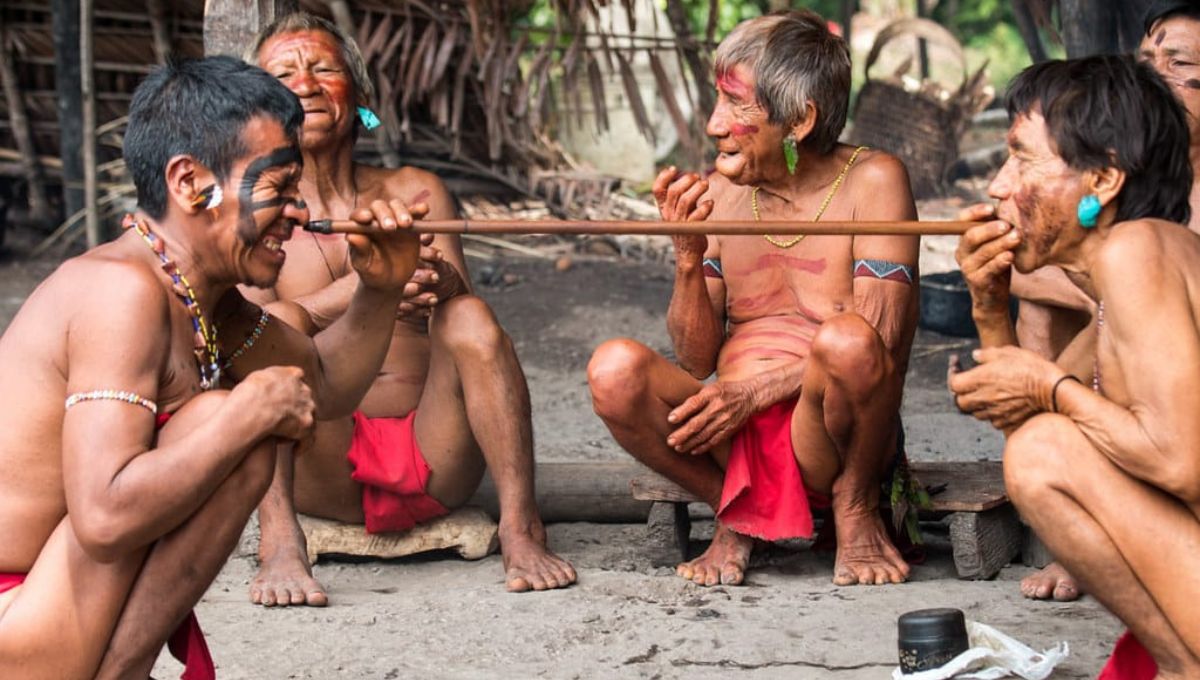
Deep within the vast and mysterious rainforests of Brazil and Venezuela lives one of the world’s most remarkable indigenous communities—the Yanomami People. Hidden among dense jungle canopies, winding rivers, and remote forest territories, the Yanomami have preserved their traditions, spiritual beliefs, and unique way of life for centuries.
Often described as one of the largest relatively isolated indigenous groups in South America, the Yanomami represent far more than a remote tribal society. They are protectors of the Amazon rainforest, keepers of ancient ecological knowledge, and living symbols of humanity’s deep connection to nature.
For generations, the Yanomami survived in harmony with one of the most biodiverse ecosystems on Earth. Their culture evolved around the rhythms of the rainforest, developing sophisticated systems of farming, hunting, healing, and communal living.
Today, however, the Yanomami face enormous threats from illegal gold mining, deforestation, disease, and environmental destruction.
Their struggle has become one of the most important indigenous rights and environmental stories in the modern world.
Who Are the Yanomami?
The Yanomami are an indigenous people living across remote areas of the Amazon basin along the border between Brazil and Venezuela.
Their total population is estimated at around 38,000 people living in hundreds of communities scattered throughout the rainforest.
The Yanomami inhabit one of the largest indigenous territories in the Amazon, an area filled with:
- Dense rainforest
- Rivers and streams
- Mountains
- Wetlands
- Rich biodiversity
Many Yanomami villages remain difficult to access, reachable only by boat, aircraft, or long forest journeys.
This isolation helped preserve their traditional culture for centuries.
Although some communities now have contact with modern society, many Yanomami groups continue to maintain ancestral customs, languages, and spiritual traditions deeply connected to the forest.
Life in the Amazon Rainforest
The Amazon rainforest is one of the most biologically diverse ecosystems on Earth.
For the Yanomami, the forest is not simply a place to live.
It is:
- Their home
- Their source of food
- Their spiritual world
- Their pharmacy
- Their identity
Every aspect of Yanomami life depends on the rainforest.
Their survival relies on deep ecological knowledge passed down through generations.
The Yanomami understand:
- Animal behavior
- Plant medicine
- Seasonal cycles
- River systems
- Hunting techniques
- Sustainable farming practices
This environmental knowledge allows them to survive in regions where outsiders would struggle to live.
Their lifestyle demonstrates a sophisticated understanding of ecological balance and sustainability.
The Unique Shabono Houses
One of the most distinctive features of Yanomami culture is their communal housing structure known as the shabono.
The shabono is a large circular communal shelter built using:
- Wooden poles
- Palm leaves
- Vines
- Forest materials
Multiple families live together under a single massive roof structure arranged around a large open central area.
The central space serves as a gathering place for:
- Ceremonies
- Rituals
- Storytelling
- Social activities
- Community meetings
The design reflects the Yanomami emphasis on collective living and social cooperation.
Unlike isolated nuclear-family homes common in industrial societies, the shabono reinforces strong communal bonds and shared responsibility.
Hunting, Farming, and Survival
The Yanomami rely on a combination of hunting, fishing, gathering, and small-scale farming to sustain their communities.
Their agricultural system includes crops such as:
- Cassava
- Bananas
- Plantains
- Sweet potatoes
- Fruits
- Tobacco
Cassava is especially important and serves as a major food staple.
The Yanomami also gather wild fruits, nuts, honey, and medicinal plants from the forest.
Hunting remains a vital skill.
Using bows, arrows, and traditional techniques, hunters track and capture animals including:
- Monkeys
- Wild pigs
- Birds
- Tapirs
- Small mammals
Fishing provides another important food source, especially for river-based communities.
Their survival methods are based on balance with nature rather than large-scale environmental exploitation.
A Deep Spiritual Connection to Nature
The Yanomami possess a rich spiritual tradition closely connected to the natural world.
They believe the rainforest is inhabited by powerful spirits associated with:
- Animals
- Rivers
- Mountains
- Forests
- Ancestors
- Natural forces
The spiritual and physical worlds are deeply interconnected in Yanomami belief systems.
Maintaining harmony between humans and the spirit world is considered essential for health, balance, and survival.
This worldview shapes daily life, rituals, and social behavior.
The forest is not viewed as an object to dominate or exploit.
It is seen as a living spiritual universe deserving respect.
The Important Role of Shamans
Shamans hold highly respected positions within Yanomami society.
They act as:
- Spiritual guides
- Healers
- Protectors
- Mediators between worlds
Through rituals, chants, and spiritual practices, shamans communicate with spirits believed to influence health, weather, hunting success, and community well-being.
Traditional healing methods often involve extensive knowledge of medicinal plants and spiritual ceremonies.
For the Yanomami, illness may involve both physical and spiritual causes.
Shamans therefore play essential roles in preserving both community health and cultural continuity.
The Sacred Funeral Ritual of Endocannibalism
One of the most widely discussed Yanomami customs is their funeral ritual sometimes referred to as endocannibalism.
While frequently misunderstood by outsiders, the ritual is deeply spiritual and symbolic.
After a community member dies:
- The body is cremated
- The ashes and bone fragments are carefully collected
- The remains are mixed into a plantain or banana soup
- Family members consume the ashes during a sacred ceremony
For the Yanomami, this practice represents:
- Respect for the deceased
- Spiritual continuity
- Family unity
- The return of the spirit to the community
The ritual is not viewed as shocking or violent within Yanomami culture.
Instead, it reflects a profound belief that loved ones should remain spiritually connected to the family after death.
This tradition highlights how attitudes toward death and mourning vary greatly across human cultures.
Social Structure and Community Life
Yanomami society is built around kinship, cooperation, and communal responsibility.
Villages are often organized around extended family relationships.
Daily life includes:
- Farming
- Hunting
- Childcare
- Tool-making
- Storytelling
- Ritual gatherings
Knowledge is passed orally from elders to younger generations.
Children learn survival skills, cultural traditions, and spiritual beliefs through observation and participation in community life.
Social harmony and cooperation are essential for survival in the rainforest environment.
The First Major Outside Contacts
For centuries, the Yanomami remained largely isolated from the outside world.
Significant outside contact increased during the 20th century through:
- Explorers
- Missionaries
- Researchers
- Government expeditions
- Mining interests
While some contact brought healthcare and new technologies, it also introduced devastating problems.
Diseases such as:
- Measles
- Influenza
- Malaria
spread rapidly among isolated communities lacking immunity to outside illnesses.
These epidemics caused major population losses and social disruption.
Illegal Gold Mining and Environmental Destruction
Today, one of the greatest threats facing the Yanomami is illegal gold mining.
Thousands of illegal miners have invaded Yanomami territories in recent decades, particularly in Brazil.
Mining operations cause severe damage including:
- Deforestation
- River contamination
- Mercury pollution
- Wildlife destruction
- Violence
- Disease outbreaks
Mercury used in gold extraction contaminates rivers and fish, creating serious health problems for indigenous communities. Recent studies found widespread mercury contamination affecting Yanomami communities, especially children. (Reuters)
Illegal mining also contributes to malnutrition, displacement, and environmental collapse.
Experts warn that these activities threaten both the Yanomami people and the broader Amazon ecosystem. (The Washington Post)
Humanitarian Crisis in Yanomami Territory
In recent years, the Yanomami crisis gained international attention due to reports of:
- Severe malnutrition
- Disease outbreaks
- Child deaths
- Environmental destruction
- Expanding illegal mining camps
The Brazilian government launched major operations targeting illegal miners inside Yanomami territory.
Officials reported significant reductions in illegal mining activity after federal interventions. (Serviços e Informações do Brasil)
According to Brazilian government data, active illegal mining sites in Yanomami lands were dramatically reduced through enforcement operations and environmental monitoring efforts. (Serviços e Informações do Brasil)
However, illegal mining remains an ongoing challenge as criminal networks continue attempting to exploit Amazon territories. (AP News)
Guardians of the Amazon Rainforest
The Yanomami are often called guardians of the Amazon because their survival is closely tied to protecting the forest.
Research increasingly shows that indigenous-managed lands are among the most effective barriers against deforestation.
The Yanomami’s traditional lifestyle depends on preserving:
- Rivers
- Wildlife
- Forest biodiversity
- Ecological balance
Their environmental knowledge has allowed them to live sustainably within the rainforest for centuries without destroying it.
Protecting indigenous communities like the Yanomami is therefore essential not only for cultural preservation but also for global environmental conservation.
Cultural Survival in a Modern World
Like many indigenous groups worldwide, the Yanomami face difficult challenges balancing tradition and modernization.
Some communities now have access to:
- Schools
- Medical clinics
- Communication technology
- Trade opportunities
At the same time, there are concerns about:
- Loss of language
- Cultural assimilation
- Environmental destruction
- Economic exploitation
Many Yanomami leaders continue fighting to preserve their land rights, traditions, and cultural identity while adapting carefully to modern realities.
What the Yanomami Teach Humanity
The Yanomami offer powerful lessons about humanity’s relationship with nature.
Their culture demonstrates that human societies can survive sustainably when they respect ecological balance and community cooperation.
They remind the modern world that:
- Nature is interconnected
- Forests are living ecosystems
- Cultural diversity matters
- Indigenous knowledge has value
- Environmental destruction affects everyone
In an era of climate change and deforestation, the wisdom of indigenous rainforest communities has become more important than ever.
A People Fighting to Protect Their Future
The Yanomami are not relics of the past.
They are living communities fighting to protect their culture, forests, and future in the face of enormous external pressures.
Their story is about resilience, survival, spirituality, and the enduring bond between humanity and the natural world.
As illegal mining, deforestation, and climate change threaten the Amazon, the struggle of the Yanomami has become a global issue.
Protecting the Yanomami means protecting one of Earth’s greatest rainforests and preserving a cultural heritage that has survived for centuries deep within the heart of the Amazon.