Hidden among the mist-covered mountains of Indonesia lies one of the world’s most fascinating and spiritually rich cultures—the Toraja People. Living in the highlands of South Sulawesi, the Toraja are globally renowned for their extraordinary funeral ceremonies, unique ancestral traditions, dramatic architecture, and deeply philosophical understanding of life and death.
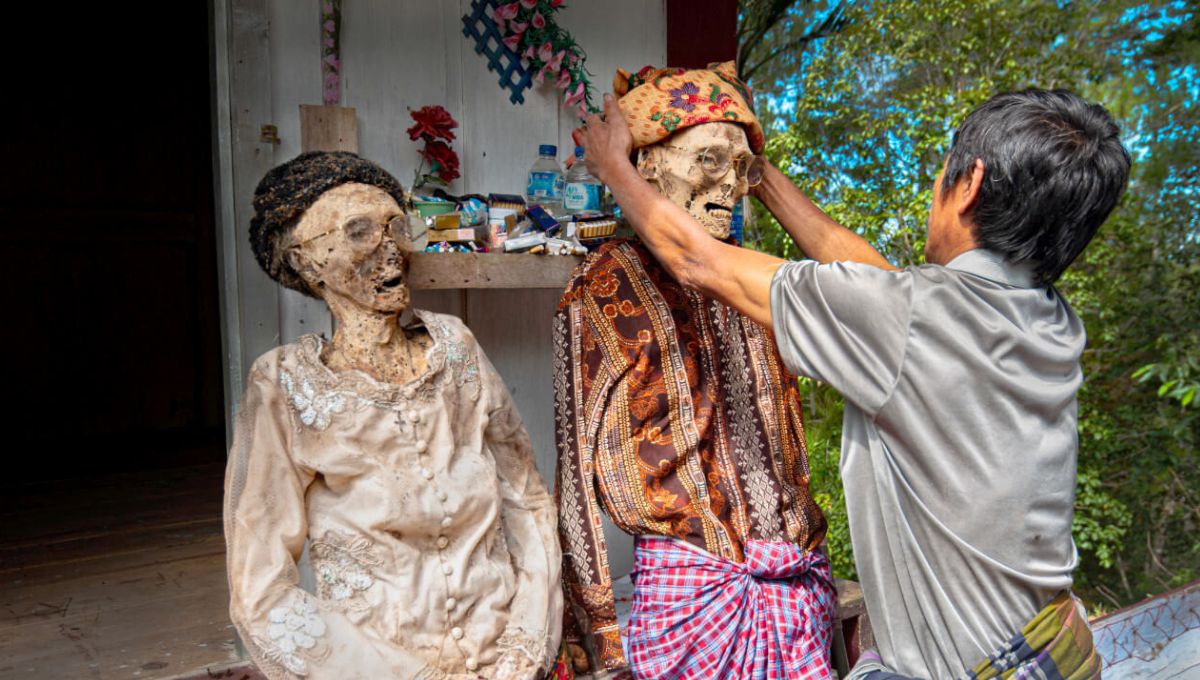
To outsiders, some Torajan customs may seem astonishing. Families keep deceased relatives in their homes for months or even years. Funeral ceremonies involve massive community gatherings and buffalo sacrifices. Ancestors are periodically exhumed, cleaned, dressed in fresh clothes, and honored in emotional family reunions.
Yet for the Toraja, these traditions are not strange or morbid. They are acts of love, respect, remembrance, and spiritual continuity.
Their culture offers a rare glimpse into a worldview where death is not feared as an ending, but embraced as part of an ongoing relationship between generations.
A Remote Highland Civilization
The Toraja inhabit the mountainous interior of South Sulawesi, an island region known for its breathtaking landscapes, cool mountain air, lush rice terraces, dense forests, and dramatic cliffs.
For centuries, the rugged terrain helped isolate the Toraja from outside influence, allowing them to preserve unique cultural traditions that survived long after many indigenous customs disappeared elsewhere.
The word “Toraja” roughly means “people of the uplands,” reflecting their strong connection to the mountain environment they have called home for generations.
Traditional Torajan villages are often surrounded by rice fields and bamboo groves, with families living in closely connected communities built around kinship, ancestral identity, and ceremonial obligations.
Even today, despite increasing modernization and tourism, many Torajans continue to maintain customs passed down over hundreds of years.
Their culture remains one of the most distinctive in Southeast Asia.
The Spiritual Foundations of Torajan Life
At the heart of Torajan society lies a deep spiritual worldview rooted in ancestral reverence and cosmic balance.
Historically, the Toraja followed an indigenous belief system known as Aluk To Dolo, meaning “The Way of the Ancestors.” This traditional faith governs social behavior, rituals, ceremonies, agricultural cycles, and relationships between the living and the dead.
Although many modern Torajans are now Christian due to missionary influence during the colonial era, ancestral traditions continue to play a major role in cultural life.
For the Toraja, ancestors are not forgotten figures of the past. They remain active members of the family and spiritual community.
This belief shapes nearly every aspect of Torajan identity, especially their approach to death.
Tongkonan: The Iconic Houses of the Toraja
One of the most visually striking elements of Torajan culture is the tongkonan, the traditional ancestral house that has become a symbol of the community itself.
These remarkable wooden structures feature dramatically curved roofs that resemble buffalo horns or ancient boats. Raised on wooden piles and decorated with intricate carvings and symbolic colors, tongkonan houses are architectural masterpieces.
But they are far more than simple homes.
Each tongkonan represents:
- Family lineage
- Social status
- Ancestral heritage
- Spiritual connection
- Community identity
The houses are traditionally passed down through generations and serve as sacred family centers where important ceremonies and gatherings occur.
The carvings and decorations often contain symbolic meanings related to prosperity, fertility, harmony, and protection.
Buffalo horn displays placed in front of some tongkonan homes signify the number of buffalo sacrificed during family ceremonies, reflecting both wealth and social prestige.
These houses stand not only as homes, but as living monuments to ancestry and continuity.
The Torajan View of Death
The Toraja are internationally famous for their extraordinary funeral customs, but understanding these rituals requires understanding their philosophy of death.
In much of the modern world, death is treated as sudden and final. Funerals are often brief, and the deceased are quickly buried or cremated.
For the Toraja, however, death is viewed as a gradual transition rather than an immediate separation.
When a person dies, they are not considered truly gone right away. Instead, they are regarded as “sick” or “resting” until the proper funeral ceremony takes place.
Because funerals are extremely important and expensive, families may spend months or even years preparing for them.
During this period:
- The body remains in the family home
- Relatives continue speaking to the deceased
- Food and drinks may still be offered
- The deceased is symbolically treated as part of daily life
Modern preservation techniques are often used today to maintain the body.
To outsiders, this may appear unsettling. But for the Toraja, it reflects deep love and emotional continuity.
Death is not an abrupt disappearance—it is a slow journey toward the afterlife.
Lavish Funeral Ceremonies: Honoring the Departed
Torajan funerals are among the most elaborate and expensive ceremonies in the world.
These events can last several days and involve entire communities gathering to honor the deceased through ritual, music, feasting, dance, and sacrifice.
Families may spend years saving money for a funeral because social prestige and ancestral respect are closely tied to the scale of the ceremony.
For the Toraja, a grand funeral demonstrates:
- Love for the deceased
- Respect for ancestors
- Family honor
- Community responsibility
- Spiritual devotion
Large funerals attract relatives from across Indonesia and beyond, transforming the event into both a sacred ritual and major social reunion.
Traditional dances, ceremonial chants, and processions play central roles throughout the ceremonies.
The Sacred Importance of Water Buffalo
No animal holds greater significance in Torajan culture than the water buffalo.
Buffalo are symbols of:
- Wealth
- Power
- Prestige
- Spiritual importance
During funeral ceremonies, buffalo are sacrificed because they are believed to help carry the soul of the deceased into the afterlife.
The more buffalo sacrificed, the greater the honor shown to the departed.
Special albino buffalo, known as tedong bonga, are especially prized and can cost enormous sums of money.
For wealthy families, funerals may involve dozens of buffalo sacrifices, representing both spiritual commitment and social standing.
Although these rituals sometimes generate controversy among outsiders and animal rights groups, within Torajan culture they are deeply sacred acts rooted in centuries of tradition and belief.
Burial Cliffs and Hanging Graves
Traditional Torajan burial practices are unlike almost anywhere else in the world.
Rather than burying the dead underground, many Torajans historically placed coffins inside caves, rock cliffs, or hanging graves carved into mountainsides.
The higher the burial site, the closer the deceased was believed to be to the spiritual realm.
Some burial cliffs contain wooden effigies called tau tau, carved representations of the deceased that stand guard over the landscape.
These lifelike statues symbolize ongoing spiritual presence and ancestral protection.
Exploring Torajan burial sites reveals a haunting yet beautiful blend of spirituality, artistry, and reverence for the dead.
Ma’Nene: The Ceremony of Cleaning the Dead
Among the Toraja’s most remarkable traditions is Ma’Nene, often translated as “The Ceremony of Cleaning Corpses.”
During this ritual, families carefully exhume the bodies of deceased relatives from their tombs.
The bodies are then:
- Cleaned
- Groomed
- Dressed in fresh clothing
- Photographed with family members
- Honored through prayer and celebration
Far from being frightening, the ceremony is deeply emotional and affectionate.
Families believe that maintaining relationships with ancestors strengthens family bonds and preserves spiritual harmony.
For the Toraja, the dead remain part of the family.
Ma’Nene reflects a worldview in which love and connection continue beyond physical death.
Community, Family, and Social Structure
Torajan society places enormous importance on collective identity and kinship.
Families work together to organize ceremonies, maintain ancestral houses, care for farmland, and preserve traditions.
Major life events—births, marriages, funerals, harvests—are communal responsibilities rather than purely private matters.
Elders are highly respected, and oral traditions help transmit cultural knowledge across generations.
This strong social cohesion has helped the Toraja preserve their identity despite rapid changes in the modern world.
Tourism and Global Fascination
Over the past several decades, the Toraja have become one of Indonesia’s most famous cultural attractions.
Travelers from around the world visit South Sulawesi to witness:
- Traditional villages
- Funeral ceremonies
- Cliff burials
- Tongkonan architecture
- Indigenous rituals
Anthropologists and historians have also studied the Toraja extensively due to the uniqueness of their cultural practices.
Tourism has brought economic opportunities, but it has also created challenges.
Some critics argue that outsiders sometimes sensationalize Torajan funeral customs without fully understanding their spiritual meaning.
Others worry that commercialization could gradually alter sacred traditions.
Balancing cultural preservation with modern tourism remains an ongoing challenge for the community.
Christianity and Cultural Adaptation
Dutch missionaries introduced Christianity to the Toraja during the colonial period in the early 20th century.
Today, many Torajans identify as Christian, particularly Protestant or Catholic.
However, rather than completely abandoning ancestral traditions, many communities blended Christian beliefs with older cultural practices.
As a result, modern Torajan identity often combines:
- Christian faith
- Indigenous spirituality
- Ancestor reverence
- Traditional ceremonial customs
This cultural adaptation demonstrates the resilience and flexibility of Torajan society.
The Modern Challenges Facing the Toraja
Like many indigenous cultures worldwide, the Toraja face increasing pressure from globalization and modernization.
Young people moving to cities, economic change, digital culture, and tourism all influence traditional lifestyles.
Maintaining expensive ceremonial traditions can also place financial burdens on families.
At the same time, climate change and environmental pressures affect agriculture and rural livelihoods across the region.
Yet despite these challenges, the Toraja continue working to preserve their language, architecture, rituals, and ancestral heritage.
Cultural pride remains incredibly strong.
What the Toraja Teach the World About Death
Perhaps the most profound lesson the Toraja offer the modern world is their unique perspective on death.
In many societies today, death is hidden away, feared, or avoided in conversation. Grief is often rushed, and mourning can feel isolated.
The Toraja approach death differently.
For them:
- Death is gradual, not sudden
- Ancestors remain spiritually present
- Mourning is communal
- Remembering the dead is an act of love
- Funerals celebrate continuity, not only loss
Their traditions remind us that cultures interpret life and death in vastly different ways.
Rather than seeing death purely as tragedy, the Toraja view it as a sacred transition that strengthens connections between generations.
A Culture of Memory, Respect, and Continuity
The Toraja are far more than their famous funerals.
They are guardians of an ancient cultural legacy shaped by mountains, spirituality, community, and profound respect for ancestry.
From the majestic tongkonan houses to the emotional Ma’Nene rituals, every aspect of Torajan culture reflects a belief that family bonds endure beyond time itself.
In an increasingly fast-paced and disconnected world, the Toraja offer a powerful reminder of the importance of memory, tradition, and human connection.
Their culture stands as one of humanity’s most extraordinary examples of how communities honor life by honoring the dead.