
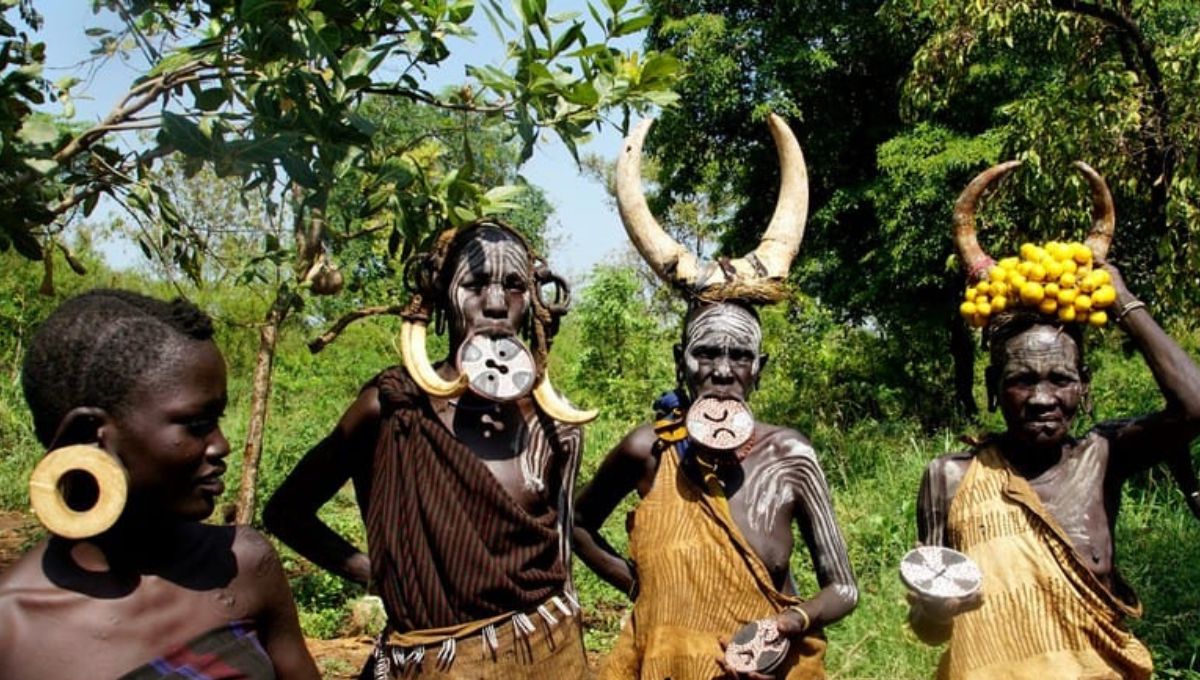
Deep within the remote wilderness of southern Ethiopia lives one of Africa’s most fascinating and culturally unique indigenous communities—the Mursi Tribe. Famous around the world for their striking lip plates, dramatic body art, and warrior traditions, the Mursi people have become powerful symbols of cultural identity and resilience.
Yet beyond the photographs and documentaries lies a far richer story—one of survival, pride, ancient customs, and adaptation in a rapidly changing world.
The Mursi are not simply a “tourist attraction” or an exotic tribe frozen in time. They are a proud pastoral community with deep traditions, strong social structures, and a fierce determination to protect their ancestral way of life.
Life in Ethiopia’s Remote Omo Valley
The Mursi primarily inhabit the lower Omo Valley in southern Ethiopia, near the border of South Sudan. This rugged region is known for its sweeping savannahs, winding rivers, harsh climate, and extraordinary biodiversity.
The Omo Valley is considered one of the most culturally diverse places in Africa, home to numerous indigenous ethnic groups who have preserved traditional lifestyles for generations. However, the environment is far from easy.
Extreme heat, seasonal droughts, and limited infrastructure make daily life challenging. For centuries, the Mursi have survived by adapting perfectly to this demanding landscape.
Their lives revolve around cattle herding, small-scale farming, and seasonal migration. Livestock are at the center of Mursi society—not merely as food sources, but as symbols of wealth, honor, family status, and social identity.
A man’s importance is often measured by the size and health of his cattle herd. Cows are used in marriage arrangements, conflict settlements, and ceremonial events. In many ways, cattle are the foundation upon which Mursi culture is built.
The Cultural Meaning Behind the Famous Lip Plates
Perhaps the most internationally recognized aspect of Mursi culture is the tradition of lip plates worn by some women.
During adolescence, a small incision is made in the lower lip, and a wooden peg is inserted. Over time, progressively larger clay or wooden plates may be worn, stretching the lip gradually.
To outsiders, the practice may appear shocking or mysterious, but for the Mursi, lip plates carry deep cultural and symbolic significance.
Traditionally, they represent:
- Beauty
- Womanhood
- Social maturity
- Cultural pride
- Identity within the community
The size of the plate has sometimes been associated with status or marriage value, though interpretations vary and modern perspectives differ among families.
Importantly, not all Mursi women choose to wear lip plates today. Younger generations increasingly make personal choices about whether to continue the tradition. This reflects how cultures naturally evolve over time while still preserving core identities.
For many Mursi women, the lip plate remains a proud expression of heritage rather than a requirement.
Scarification and Body Art: Symbols Written on the Skin
Body decoration plays an essential role in Mursi culture.
Both men and women practice scarification, creating intricate raised patterns on the skin through small cuts. Ash or natural substances may be rubbed into the wounds to enhance the texture and visibility of the scars.
These markings are far more than decoration.
Scarification can symbolize:
- Personal achievements
- Bravery
- Physical endurance
- Important life events
- Beauty and attractiveness
- Tribal identity
Every pattern can tell a story.
Some scars commemorate successful hunts or victories in combat, while others may mark adulthood, motherhood, or major milestones. The human body becomes a living canvas carrying personal and cultural history.
In many African societies, scarification traditions have faded under modernization, but among the Mursi, these practices continue to remain important cultural expressions.
Donga: The Fierce Tradition of Stick Fighting
One of the most dramatic aspects of Mursi culture is donga, a traditional stick-fighting competition practiced by young men.
Armed with long wooden staffs, participants engage in intense one-on-one combat matches that test strength, courage, agility, and endurance.
These contests are highly respected and deeply ceremonial.
Historically, donga served several purposes:
- Training warriors
- Resolving rivalries
- Demonstrating masculinity
- Earning social prestige
- Attracting potential marriage partners
Victorious fighters gain admiration within the community and are often viewed as strong protectors.
Although injuries can occur, donga follows traditional rules and cultural expectations. It is not random violence but a structured social institution rooted in generations of warrior culture.
For the Mursi, courage and physical resilience are highly valued traits, and donga remains an important rite of passage into adulthood.
Clothing, Adornment, and Personal Expression
Traditional Mursi clothing is often minimal due to the region’s extreme climate. However, adornment and decoration hold great importance.
The Mursi use a wide range of materials for personal ornamentation, including:
- Beads
- Animal hides
- Shells
- Metal jewelry
- Painted body designs
- Horns and natural materials
Hair styling is also highly creative. Men and women frequently shape their hair using clay, beads, feathers, or shaved artistic patterns.
Body painting with natural pigments is common during ceremonies and celebrations. White chalk patterns painted across the face and body can symbolize beauty, emotion, or ritual significance.
These artistic expressions reinforce identity and strengthen community bonds.
Marriage and Family Traditions
Marriage among the Mursi traditionally involves complex negotiations between families.
Cattle often play a key role in bridewealth arrangements, where livestock are exchanged to formalize unions and strengthen family alliances.
Families are central to Mursi society, and elders hold considerable authority in decision-making. Oral traditions, storytelling, and communal ceremonies help pass cultural values from one generation to the next.
Children grow up learning survival skills, livestock care, farming techniques, and social customs from an early age.
Respect for ancestry and collective identity remains deeply embedded in daily life.
Spiritual Beliefs and Connection to Nature
The Mursi maintain spiritual traditions closely tied to nature, ancestors, and the surrounding environment.
Like many indigenous communities, they believe the natural world contains spiritual power and meaning. Rituals, ceremonies, and symbolic practices often seek harmony between people, animals, and the land.
Elders and spiritual leaders may play important roles in resolving disputes, conducting rituals, or guiding community decisions.
Their worldview reflects a profound relationship with the environment—a connection developed over centuries of living closely with nature.
Modern Challenges Facing the Mursi
Despite their cultural strength, the Mursi face increasing pressures from the modern world.
Large-scale development projects, tourism, climate change, and government policies have significantly impacted traditional lifestyles across the Omo Valley.
Land and Resource Pressures
Expansion of agriculture, infrastructure, and conservation areas has reduced access to grazing lands and seasonal migration routes essential for cattle herding.
For a pastoral society dependent on livestock movement, land loss can threaten economic survival and cultural continuity.
Tourism and Cultural Exploitation
The Mursi have become popular subjects for photographers and tourists visiting Ethiopia.
While tourism can generate income, it has also raised ethical concerns.
Some visitors reduce the Mursi to visual spectacles, focusing only on lip plates or “exotic” appearances rather than understanding the complexity of their culture.
This can lead to stereotyping and cultural commodification.
Climate Change
Irregular rainfall, drought, and environmental instability increasingly affect livestock and farming systems throughout the region.
Communities that rely heavily on natural cycles are especially vulnerable to climate disruption.
Balancing Tradition and Modernity
Like indigenous peoples worldwide, the Mursi face difficult questions about preserving traditions while adapting to modern realities.
Education, technology, healthcare access, and economic pressures continue to reshape younger generations’ perspectives.
Yet despite these challenges, many Mursi remain determined to protect their identity and cultural autonomy.
The Importance of Respecting Indigenous Cultures
The story of the Mursi is ultimately about more than lip plates or tribal customs.
It is about humanity’s incredible diversity.
Across the world, indigenous communities preserve ancient knowledge systems, cultural traditions, languages, and ways of understanding life that modern societies often overlook.
The Mursi remind us that beauty, identity, strength, and community can take many different forms.
Their traditions challenge outsiders to move beyond stereotypes and approach cultural differences with curiosity, humility, and respect.
Rather than viewing indigenous peoples as relics of the past, it is important to recognize them as living communities navigating the complexities of the present.
A Culture of Strength, Pride, and Survival
For centuries, the Mursi have survived in one of Africa’s harshest environments while preserving a unique cultural identity.
They are pastoralists, artists, warriors, storytellers, and guardians of ancestral traditions.
Their lip plates may have made them famous, but their resilience, adaptability, and cultural pride are what truly define them.
In a world becoming increasingly globalized and uniform, the Mursi stand as a powerful reminder that cultural diversity remains one of humanity’s greatest treasures.