
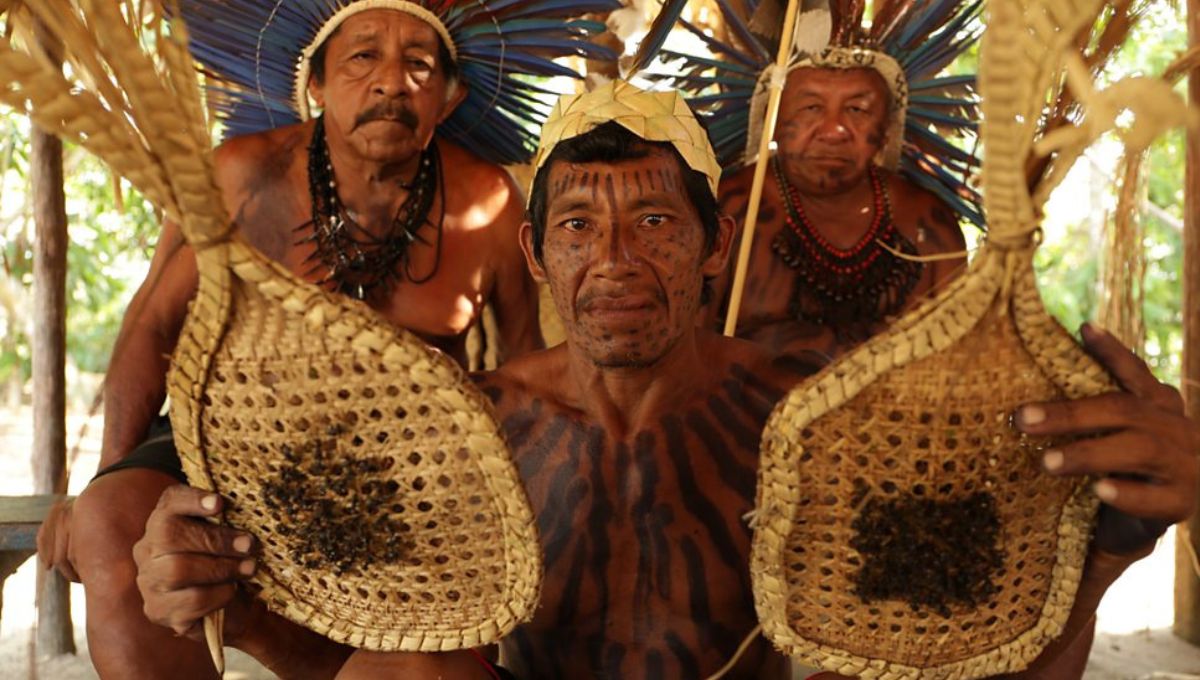
Deep within the vast and untamed rainforests of Brazil lives one of the Amazon’s most remarkable indigenous communities—the Satere-Mawe Tribe. Known for their extraordinary resilience, spiritual traditions, and one of the most intense coming-of-age rituals ever documented, the Satere-Mawe have fascinated anthropologists, travelers, and historians for generations.
For centuries, this indigenous group has survived in close harmony with the Amazon rainforest, developing deep ecological knowledge, powerful cultural traditions, and a spiritual worldview rooted in nature.
Today, the Satere-Mawe are globally famous for the legendary bullet ant initiation ritual, a ceremony so painful that it has become one of the most talked-about tribal traditions in the world.
Yet the Satere-Mawe are far more than their famous ritual.
They are farmers, healers, rainforest guardians, and cultural survivors protecting a way of life increasingly threatened by modernization and environmental destruction.
Their story is one of courage, endurance, identity, and humanity’s ancient bond with nature.
Life in the Heart of the Amazon
The Satere-Mawe primarily inhabit remote regions of the Brazilian Amazon, where dense tropical rainforest stretches across vast landscapes filled with rivers, swamps, towering trees, and extraordinary biodiversity.
The Amazon rainforest is often called the “lungs of the Earth,” containing one of the richest ecosystems on the planet.
For the Satere-Mawe, however, the rainforest is not simply an ecosystem.
It is:
- Their home
- Their spiritual world
- Their pharmacy
- Their source of food
- Their cultural identity
Every aspect of daily life is connected to the forest.
The Satere-Mawe rely on the rainforest for:
- Hunting
- Fishing
- Farming
- Medicine
- Shelter
- Ritual traditions
Their knowledge of plants, animals, rivers, and seasonal cycles has been passed down orally through countless generations.
This environmental wisdom allowed them to survive in the Amazon long before modern technology existed.
A Deep Connection to Nature
Like many indigenous Amazonian cultures, the Satere-Mawe maintain a worldview in which humans are deeply interconnected with the natural environment.
The forest is not viewed as a resource to dominate but as a living world filled with spiritual meaning.
Animals, plants, rivers, and natural forces are often associated with ancestral stories, spiritual beliefs, and cultural teachings.
This relationship with nature encourages sustainable practices that help preserve ecological balance.
For centuries, indigenous communities like the Satere-Mawe managed rainforest resources without causing the large-scale destruction seen in modern industrial systems.
Their traditions reflect an understanding that human survival depends on maintaining harmony with the environment.
The People Who Domesticated Guarana
One of the most fascinating contributions of the Satere-Mawe to the wider world is their relationship with guarana.
The Satere-Mawe are widely credited with the domestication and cultivation of the guarana plant, which is now famous globally as an ingredient in:
- Energy drinks
- Herbal supplements
- Soft drinks
- Traditional medicines
Guarana contains natural caffeine and stimulant properties that increase alertness and energy.
Long before modern corporations commercialized guarana products, the Satere-Mawe had been cultivating and using the plant for generations.
For them, guarana is not merely an economic crop.
It carries deep:
- Cultural significance
- Spiritual symbolism
- Medicinal importance
Traditional stories describe guarana as a sacred gift connected to ancestral mythology and community identity.
Today, guarana cultivation remains an important source of income for many Satere-Mawe communities.
Daily Life in the Rainforest
The Satere-Mawe maintain a lifestyle closely connected to the rhythms of the Amazon.
Most communities engage in a combination of:
- Farming
- Hunting
- Fishing
- Gathering forest resources
Staple foods include:
- Cassava
- Fruits
- Fish
- Wild game
- Forest plants
Hunting and fishing require remarkable skill and environmental knowledge.
The Satere-Mawe understand:
- Animal behavior
- River ecosystems
- Seasonal migration patterns
- Medicinal plants
- Forest navigation
Traditional tools, techniques, and oral knowledge continue to play important roles in survival and community life.
Families and villages often work cooperatively, reinforcing strong social bonds and cultural continuity.
The Legendary Bullet Ant Ritual
The Satere-Mawe are internationally famous for one of the most intense initiation ceremonies ever documented: the bullet ant ritual.
This extraordinary coming-of-age tradition is performed by young boys entering manhood.
The ceremony involves the use of bullet ants, insects known for possessing one of the most painful stings in the animal kingdom.
The pain of a bullet ant sting has often been compared to being shot by a bullet, which is how the insect earned its dramatic name.
Scientists and pain researchers frequently rank the sting at the highest levels of pain intensity.
Preparing for the Ceremony
The ritual begins with the careful collection of bullet ants from the rainforest.
Experienced tribe members temporarily sedate the ants using natural herbal substances.
The ants are then woven into specially crafted gloves made from leaves and plant fibers, with their stingers facing inward toward the wearer’s hands.
Once the ants awaken inside the gloves, the ceremony begins.
The initiate must place both hands into the gloves and endure repeated stings while performing a traditional dance before the community.
The experience is excruciating.
Participants often experience:
- Intense burning pain
- Muscle spasms
- Swelling
- Trembling
- Temporary paralysis
- Physical exhaustion
Yet the young initiates are expected to endure the pain with courage and discipline.
A Test Repeated Many Times
What makes the ritual even more extraordinary is that it is not a one-time event.
To fully demonstrate readiness for adulthood, young Satere-Mawe boys may repeat the bullet ant ritual numerous times over months or even years.
Some accounts suggest initiates may undergo the ceremony dozens of times.
This repetition transforms the ritual into a long process of personal growth and endurance.
For the Satere-Mawe, courage is not proven in a single moment.
It is built gradually through persistence, discipline, and resilience.
The Meaning Behind the Pain
To outsiders, the bullet ant ceremony may appear shocking or unnecessarily harsh.
But within Satere-Mawe culture, the ritual carries deep symbolic meaning.
The ceremony represents:
- Strength
- Maturity
- Courage
- Self-control
- Discipline
- Transition into adulthood
Pain is not viewed merely as suffering.
Instead, it becomes a teacher.
The ritual teaches young men how to face hardship, fear, and physical challenge with dignity and determination.
In many traditional societies around the world, initiation rituals mark the transition from childhood to adulthood.
The Satere-Mawe bullet ant ritual is one of the most extreme examples of this universal human tradition.
Spiritual Beliefs and Ritual Traditions
The Satere-Mawe maintain spiritual traditions closely connected to nature, ancestry, and community life.
Traditional rituals and ceremonies help strengthen social identity and preserve cultural continuity.
Shamans and spiritual leaders often play important roles within the community, guiding ceremonies and preserving sacred knowledge.
Like many indigenous cultures, the Satere-Mawe view the spiritual and physical worlds as deeply interconnected.
Animals, forests, rivers, and natural forces are often associated with spiritual meaning and ancestral wisdom.
This worldview reinforces respect for the rainforest and emphasizes balance between humans and nature.
Oral Traditions and Storytelling
Storytelling is a central part of Satere-Mawe culture.
Through oral traditions, elders pass down:
- Historical knowledge
- Myths
- Survival skills
- Moral teachings
- Spiritual beliefs
- Ecological understanding
These stories help preserve identity and strengthen connections between generations.
In societies without extensive written history, oral tradition serves as a powerful tool for cultural survival.
The stories of the Satere-Mawe carry generations of collective memory and wisdom.
Threats Facing the Satere-Mawe
Like many indigenous Amazonian communities, the Satere-Mawe face growing challenges in the modern world.
Deforestation, illegal land invasion, mining, agriculture, and environmental destruction increasingly threaten the Amazon rainforest.
These pressures endanger not only biodiversity but also indigenous cultures that depend on the forest for survival.
Threats include:
- Loss of traditional lands
- Pollution of rivers
- Wildlife decline
- Cultural assimilation
- Economic pressure
- Climate change
As roads and industrial development spread deeper into the Amazon, indigenous communities often face difficult choices between preserving traditions and adapting to modern systems.
Protecting Indigenous Rights and the Amazon
The struggle of the Satere-Mawe reflects a broader global issue involving indigenous rights and environmental conservation.
Many indigenous groups play crucial roles in protecting forests and biodiversity.
Research increasingly shows that indigenous-managed lands often experience lower rates of deforestation compared to areas controlled by outside industries.
The Satere-Mawe are not only protecting their own culture.
They are also helping preserve one of the world’s most important ecosystems.
Their survival is deeply connected to the future of the Amazon rainforest itself.
Misunderstood by the Outside World
The bullet ant ritual has brought global attention to the Satere-Mawe, but it has also led to sensationalism.
Many outsiders focus only on the extreme pain involved while overlooking the deeper cultural and spiritual significance behind the ceremony.
The ritual is not simply about suffering.
It is about:
- Identity
- Community
- Personal growth
- Responsibility
- Cultural continuity
Reducing the Satere-Mawe to a “tribe with painful rituals” ignores the complexity and richness of their society.
They are a people with sophisticated environmental knowledge, social traditions, and centuries of cultural history.
The Importance of Cultural Preservation
As globalization continues transforming indigenous communities worldwide, preserving cultural traditions becomes increasingly important.
The Satere-Mawe continue working to maintain:
- Their language
- Ritual traditions
- Ecological knowledge
- Oral history
- Spiritual practices
- Community identity
Younger generations face the challenge of balancing modern opportunities with ancestral heritage.
Many indigenous leaders emphasize that preserving culture does not mean rejecting progress—it means protecting identity while adapting thoughtfully to change.
What the Satere-Mawe Teach the World
The Satere-Mawe offer humanity powerful lessons about resilience, courage, and humanity’s connection to nature.
Their traditions remind us that:
- Strength often comes through hardship
- Nature deserves respect
- Community matters deeply
- Cultural identity shapes human life
- Ancient knowledge still has value
In many modern societies, comfort and convenience dominate daily life.
The Satere-Mawe bullet ant ritual represents a radically different philosophy—one that sees pain and endurance as pathways toward growth and maturity.
A Living Legacy of Courage
The Satere-Mawe remain one of the Amazon’s most extraordinary indigenous cultures.
From their sacred relationship with guarana to their legendary initiation rituals, they preserve traditions that have survived for centuries within the rainforest.
Yet beyond the famous bullet ant ceremony lies something even more powerful:
A people deeply connected to their land, history, and identity.
The Satere-Mawe are guardians of both culture and rainforest, carrying forward ancestral wisdom in a rapidly changing world.
Their story reminds humanity that courage is not only about physical endurance—it is also about preserving identity, protecting nature, and remaining strong in the face of change.