
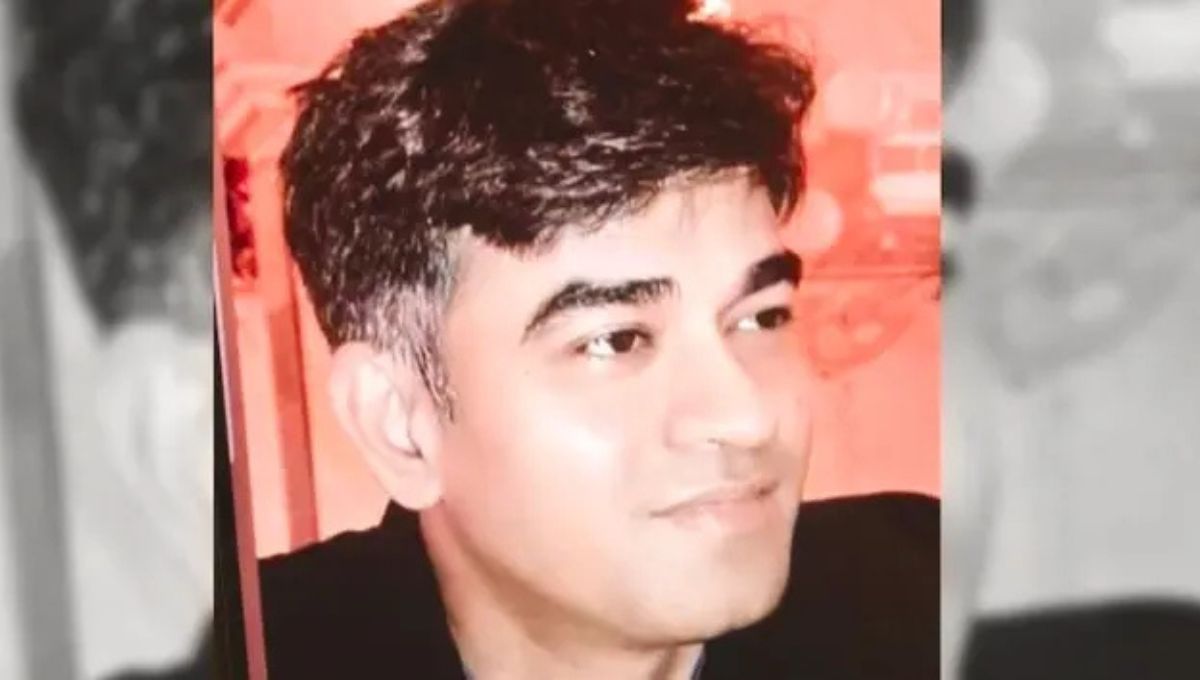
Chandranath Rath, the trusted aide of BJP leader Suvendu Adhikari who was shot dead in West Bengal’s North 24 Parganas district, had an extraordinary journey — from serving in the Indian Air Force to becoming one of the opposition leader’s closest political confidants.
The shocking killing of Chandranath Rath in West Bengal has not only triggered a major political storm but has also brought public attention to a man who largely stayed away from headlines despite holding an influential position within the Bharatiya Janata Party’s Bengal unit.
For many political observers, Rath was not a mass leader, television face, or public campaigner. Instead, he was known as a quiet strategist, a dependable organiser, and one of the closest associates of senior BJP leader Suvendu Adhikari. His journey—from a disciplined life in the Indian Air Force to becoming a trusted political coordinator in one of India’s most politically volatile states—reflects a story shaped by service, loyalty, and organisational commitment.
At 41, Chandranath Rath had built a reputation for being efficient, discreet, and deeply trusted. His sudden death has therefore created not only emotional shock among supporters and colleagues but also renewed debates around political violence in West Bengal.
Early Life In Purba Medinipur
Chandranath Rath hailed from Chandipur in Purba Medinipur district, a politically significant region in West Bengal that has long played an important role in the state’s power dynamics. The district is also closely associated with the political rise of Suvendu Adhikari, who built much of his grassroots influence there before becoming one of Bengal’s most prominent opposition leaders.
People who knew Rath from his younger days describe him as calm, disciplined, and soft-spoken. Unlike many individuals who later enter politics seeking visibility or public recognition, Rath reportedly preferred maintaining a low profile. Even after becoming part of influential political circles, he rarely appeared in front of cameras or engaged in public political debates.
His educational background also played a major role in shaping his personality. Rath studied at the Rahara Ramakrishna Mission, an institution known not only for academic education but also for discipline, spirituality, and value-based learning inspired by the teachings of Swami Vivekananda and the Ramakrishna Mission.
Friends and family members later revealed that Rath was deeply influenced by these teachings during his formative years. In fact, some close to him claimed that he once seriously considered dedicating his life to spirituality and social service before eventually deciding to pursue a professional career.
This spiritual influence reportedly remained visible throughout his life. Those who interacted with him in political circles often noted his composed behaviour, patience under pressure, and ability to handle tense situations calmly.
Nearly Two Decades In The Indian Air Force
Before entering politics, Chandranath Rath served for nearly twenty years in the Indian Air Force. His long tenure in the armed forces became one of the defining aspects of his personality and professional discipline.
Military life is known for demanding precision, loyalty, time management, and emotional resilience—qualities that later proved useful in his political career as well. Associates say Rath carried the mindset of an armed forces officer into every responsibility he handled.
Although detailed records of his postings and assignments have not been publicly discussed, people close to him stated that he maintained strong respect for discipline and organisational hierarchy throughout his career.
Serving in the Indian Air Force also exposed Rath to a broader national perspective beyond local politics. Unlike many regional political workers who grow entirely within party structures, Rath entered political life after experiencing the institutional culture of one of India’s most respected defence organisations.
His colleagues reportedly viewed him as methodical, careful with communication, and highly dependable during sensitive operations or planning work.
The armed forces background also strengthened his ability to work under pressure—an important trait in West Bengal politics, where elections and political campaigns often become highly intense and emotionally charged.
Transition From Uniform To Corporate Life
After taking voluntary retirement from the Indian Air Force, Rath briefly explored opportunities in the corporate sector. Like many retired defence personnel, he attempted to adapt his administrative and organisational skills to private-sector work.
However, his transition into corporate life appears to have been relatively short-lived. People close to the family suggest that Rath gradually became more interested in political and administrative coordination work rather than corporate employment.
This phase of his life became a turning point.
His experience in management, communication, logistics, and organisational handling naturally aligned with the operational side of politics. Rather than becoming a public political face, Rath found his strength in backend coordination and strategy implementation.
This eventually brought him closer to Suvendu Adhikari’s expanding political network.
Family’s Political Background
Interestingly, Chandranath Rath’s family already had political associations before joining the BJP.
Like the Adhikari family, the Raths were once connected with the All India Trinamool Congress (AITC). During the party’s dominance in Purba Medinipur, Rath’s mother, Hasi Rath, reportedly served in a local panchayat body under the Trinamool Congress administration.
At that time, Suvendu Adhikari himself was one of the strongest regional leaders within the Trinamool Congress and played a major role in strengthening the party’s grassroots structure in East Midnapore and nearby districts.
The relationship between the Adhikari and Rath families reportedly dates back over two decades. Political workers familiar with the region say both families shared close ties during the formative years of the Trinamool Congress in Purba Medinipur.
This long-standing relationship later became politically significant when Suvendu Adhikari left the Trinamool Congress and joined the Bharatiya Janata Party in 2020.
The Rath family also shifted allegiance to the BJP around the same period, reflecting not only political strategy but also personal loyalty toward Adhikari.
Joining Suvendu Adhikari’s Core Team
Chandranath Rath officially became more actively involved in Suvendu Adhikari’s political operations around 2019.
At that time, Adhikari was still serving as a minister in the Mamata Banerjee-led West Bengal government. Rath initially handled responsibilities linked to ministerial coordination and office management.
Political insiders say Rath’s role gradually expanded because of his efficiency and reliability. Unlike many political workers focused on visibility and public positioning, Rath concentrated on execution, coordination, and internal communication.
These qualities made him increasingly valuable within Adhikari’s political ecosystem.
Even after Adhikari dramatically switched from the Trinamool Congress to the BJP in 2020—a move that transformed Bengal politics—Rath continued working closely with him.
The transition period was politically turbulent. Adhikari’s move to the BJP intensified rivalry between the BJP and the Trinamool Congress and reshaped opposition politics in the state.
During this politically sensitive phase, trusted individuals became extremely important. According to BJP insiders, Rath emerged as one of the key figures responsible for maintaining coordination between party workers, campaign teams, and organisational networks.
The Man Behind Organisational Coordination
Although Chandranath Rath remained largely unknown to the broader public, those inside political circles reportedly considered him one of the most dependable members of Suvendu Adhikari’s team.
He handled several responsibilities simultaneously, including:
- Coordinating political meetings
- Managing logistical arrangements
- Facilitating communication between district-level workers and leadership
- Assisting during campaign operations
- Handling sensitive organisational tasks
- Maintaining schedules and movement planning
Political observers note that backend political management often determines the effectiveness of electoral campaigns. Leaders depend heavily on trusted aides who can manage information flow, logistical planning, and worker coordination without creating internal conflicts.
Rath reportedly excelled in these areas.
BJP insiders often described him as someone capable of handling sensitive assignments quietly and efficiently. His military background further strengthened his reputation for confidentiality and discipline.
He was also reportedly part of the BJP’s core planning and coordination team during several major political contests, including the Bhabanipur by-election campaign, one of the most high-profile electoral battles in recent Bengal political history.
A Low-Profile Yet Influential Figure
One striking aspect of Chandranath Rath’s life was the contrast between his influence within political operations and his public invisibility.
Unlike many political aides who seek media exposure or public prominence, Rath remained almost entirely behind the scenes.
Those close to him say he intentionally avoided unnecessary publicity. He reportedly believed that organisational work should focus on outcomes rather than personal recognition.
This approach earned him respect within sections of the BJP organisation.
Political workers often trusted him because he was seen as accessible, practical, and solution-oriented. Rather than functioning like a conventional political power broker, Rath reportedly maintained a professional and disciplined working style.
His calm demeanour also helped him navigate the emotionally charged atmosphere of Bengal politics, where political rivalries frequently become intense.
The Tragic Killing In Madhyamgram
Chandranath Rath’s life came to a tragic and violent end on Wednesday night.
According to reports, motorcycle-borne attackers intercepted his vehicle near the Doharia area of Madhyamgram in North 24 Parganas district and opened fire at close range.
The attack reportedly happened suddenly, leaving little opportunity for escape or response.
The killing immediately triggered shock across political circles in West Bengal. BJP leaders strongly condemned the incident, alleging deteriorating law and order conditions and raising concerns about political violence in the state.
Given Rath’s close association with Suvendu Adhikari and his role within BJP organisational operations, the incident quickly became politically sensitive.
Security agencies and investigators began examining multiple angles, including possible political motives behind the attack.
The incident also intensified political tensions in West Bengal, which has historically witnessed frequent clashes, violence, and confrontations during election cycles and periods of political transition.
Political Reactions Across Bengal
The killing of Chandranath Rath sparked strong reactions from BJP leaders and opposition figures.
Several BJP leaders described the incident as an attack not just on an individual but on democratic political functioning in the state. Party workers across multiple districts reportedly organised protests and demonstrations demanding strict action against the attackers.
Political analysts noted that the timing of the incident further amplified tensions because it occurred shortly after significant political developments and election-related confrontations in the state.
For Suvendu Adhikari personally, Rath’s death represented more than the loss of a political aide. Observers say Rath belonged to a small inner circle of trusted associates who had worked closely with Adhikari during politically turbulent years.
Within the BJP organisation, Rath was widely viewed as someone who could be trusted with confidential assignments and sensitive political coordination work.
A Life Defined By Discipline And Loyalty
Chandranath Rath’s journey stands out because it crossed very different worlds—spiritual influence, military service, corporate experience, and political organisation.
Each phase of his life contributed to shaping the personality people later encountered in political circles.
His education at the Ramakrishna Mission gave him a foundation rooted in discipline and values. His long Air Force career strengthened his organisational mindset and resilience. His political journey reflected loyalty and operational efficiency rather than ambition for public fame.
Even critics within political circles acknowledged that Rath maintained a relatively low-profile and professional approach compared to the aggressive culture often associated with competitive politics.
Many who worked with him reportedly remember him as a calm and dependable individual capable of handling high-pressure situations without attracting unnecessary attention.
The Larger Debate Around Political Violence
Rath’s killing has once again revived concerns regarding political violence in West Bengal.
The state has a long history of politically linked confrontations, especially during elections and major political transitions. Successive governments and opposition parties have repeatedly accused each other of fostering an environment of intimidation and violence.
The death of someone like Chandranath Rath—who worked largely behind the scenes rather than as a public political speaker—has further intensified debates around the risks faced by political workers and coordinators operating at different organisational levels.
Political analysts argue that incidents like these deepen public anxiety and contribute to the perception of increasing hostility in Bengal’s political environment.
For many BJP workers, Rath’s death symbolises the dangers faced by individuals involved in organisational politics at the grassroots and strategic levels.
Remembering Chandranath Rath
In the days following his death, tributes poured in from political colleagues, local supporters, and acquaintances who remembered Chandranath Rath as disciplined, humble, and deeply loyal.
Despite operating within influential political circles, he remained someone who preferred silent execution over public attention.
His life story—from a spiritually influenced student to an Air Force serviceman and eventually a trusted political coordinator—reflects a unique and layered journey rarely seen in conventional political narratives.
For Suvendu Adhikari’s political network, Rath was reportedly far more than an employee or assistant. He was viewed as a dependable confidant who handled responsibilities with commitment and discretion.
His tragic death has therefore left not only political questions but also a personal void among those who knew him closely.
As investigations continue and political debates intensify, Chandranath Rath’s story remains a reminder of the complex human lives that exist behind India’s high-voltage political battles.